Tech Question of 2025: What is AI Upscaling
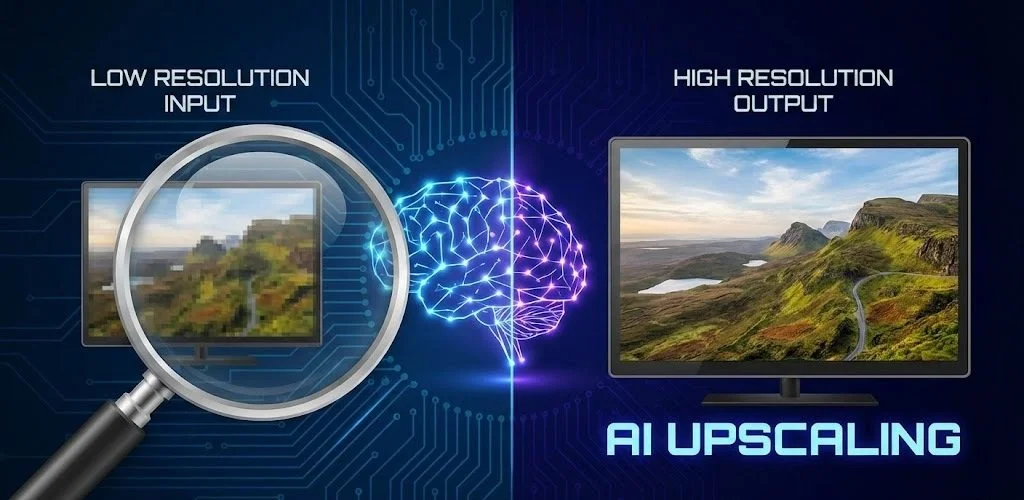
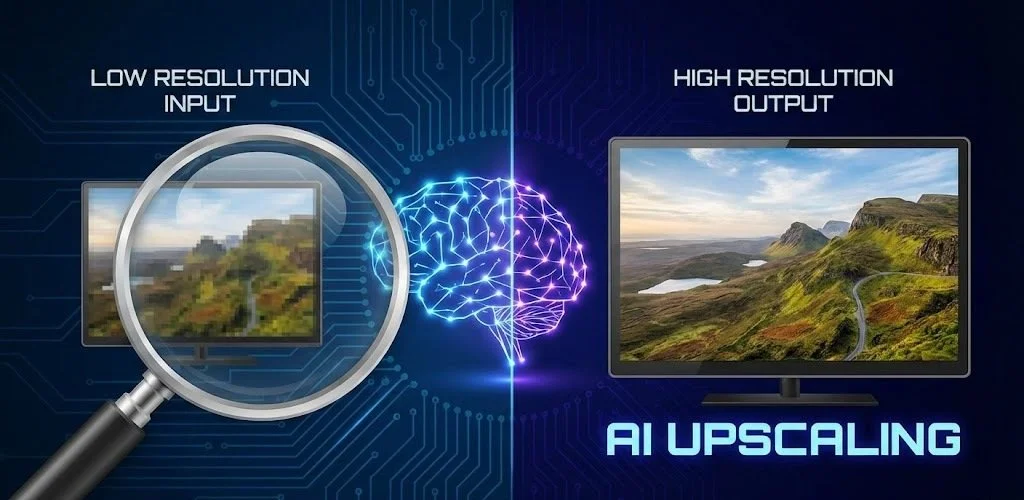
Since the full emergence of AI in 2025, you may have seen or heard the term "AI Upscaling." What is it you ask? It is a technology that uses artificial intelligence to increase the resolution of an image or video. Unlike traditional methods that stretch images, AI upscaling analyzes the content and imagines new detail, filling in gaps and creating sharper, higher-quality results. Let's further examine the functionality of AI Upscaling.
The Difference Between Guessing and Knowing
To understand the full function of AI upscaling, you need to compare the traditional way of making images increasingly bigger. With Traditional Upscaling, imagine a small checkerboard. If users want to enlarge images, you need to scale the squares. Traditional methods will address the gaps by computing the average color of the surrounding pixels. As a result, you have blurry, soft images that are bigger, but lack detail because the computer isn't adding new information. While spreading old information thinner.
Under The Hood of AI Upscaling
The entire technology relies heavily on Deep Learning and Neural Networks (specifically GANs, an acronym for generative adversarial networks). Training occurs when developers feed the AI a high-quality 4K image and downsize it to a pixelated version of the same image. The AI tries to upscale the pixelated version to match the 4K one. Correction takes place when the AI compares it to the original ideal copy. The algorithm adjusts when everything goes awry.
Significant Beneficial Uses
Video games benefit significantly from real-time upscaling. Games that run at native 4K resolution are very demanding on the graphics card. To meet demand, graphics cards render a game at a lower resolution (1080p), and the AI instantly upscales it to 4K before displaying it on a user's monitor. You get high frame rates, smooth gameplay, and clear, sharp visuals. Prominent tech companies use some form of AI upscaling technology. You have DLSS (Deep Learning Super Sampling), NVIDIA's proprietary technology that requires RTX-series graphics cards. FSR (Fidelity FX Super Resolution) is primarily supported on AMD graphics cards. XeSS is Intel's version of AI upscaling.

Use for Restoring Photos and Video
AI upscaling can be used to restore old photos or remaster old movies. The technology can take a grainy, low-resolution JPEG from 20 years ago and render it print-quality sharp. On the video side, you can take old 480p DVD footage and upscale it to look decent on a modern 4K TV. The tools you can use are Topaz Photo-Video AI (an industry standard for most consumers), Waifu2X (designed for upscaling anime and cartoons without blurring), and Adobe Lightroom ( Super Resolution), a built-in feature for photographers.
There are Limitations
Since AI models predict missing data, they may misinterpret visual noise, turning random pixel grain into recognizable but incorrect shapes. For example, users may see faces in a rocky texture. Also, Temporal artifacts may struggle to maintain frame-to-frame consistency, causing shimmering or ghosting on moving objects.
Conclusion: The End of Native Resolution as We Know It
AI Upscaling represents a significant shift in digital imaging, moving from pixel-level display to complete reconstruction. No longer just a restoration tool, it's an essential infrastructure for the future of media and gaming.