Explanation Needed: How do NVMe SSDs Work?
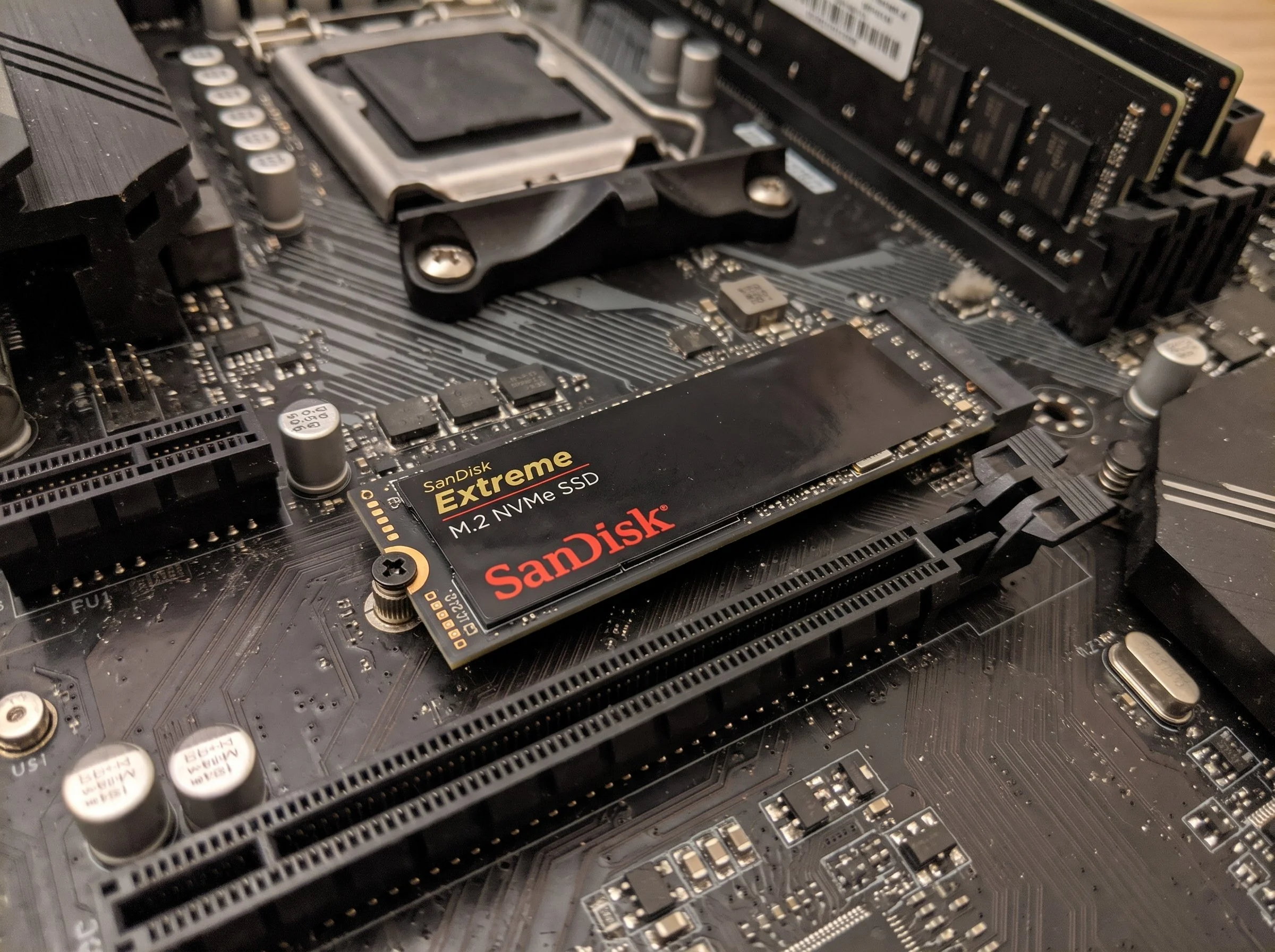
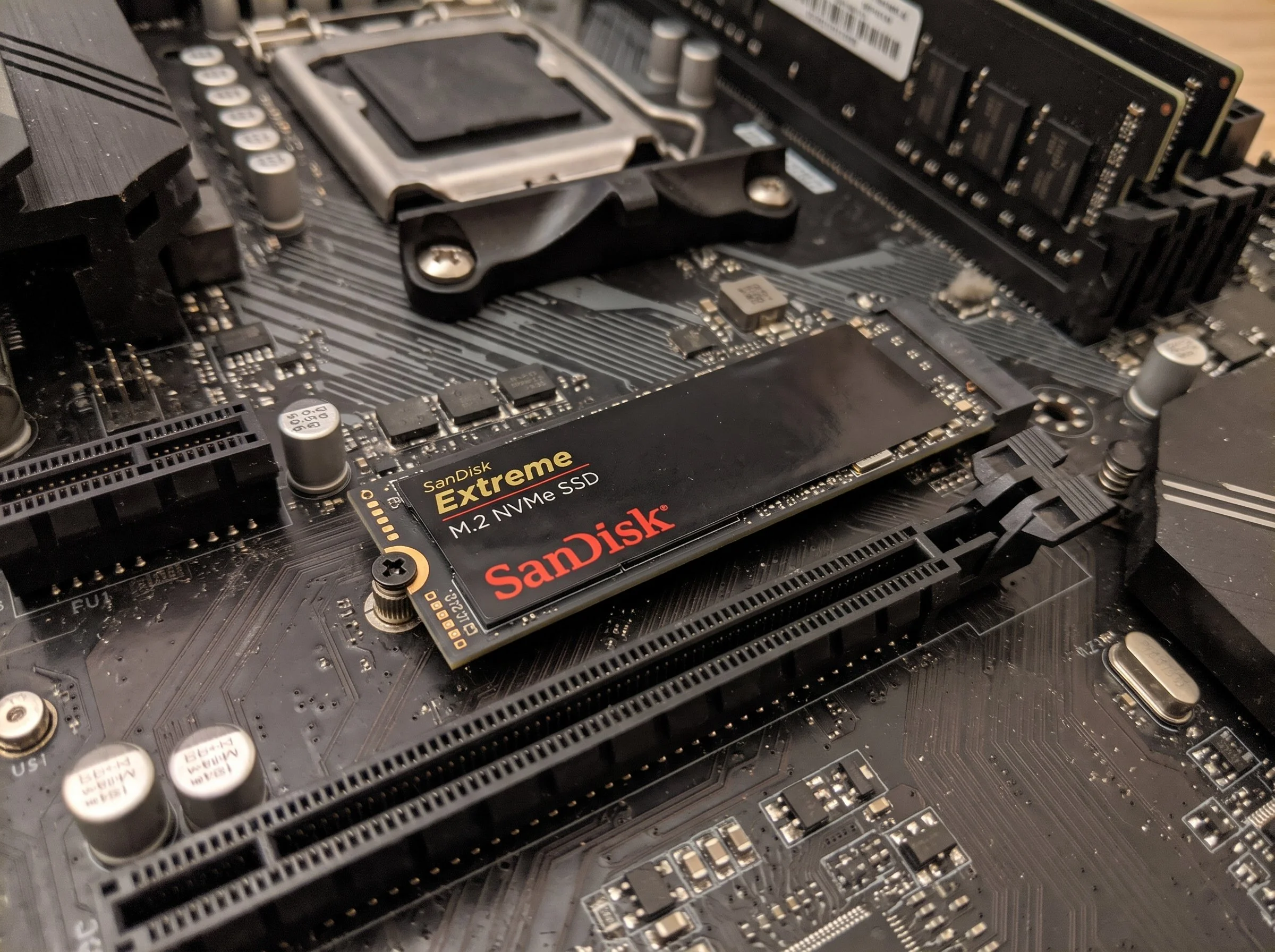
So what's an NVMe SSD, you ask? It's an acronym for Non-Volatile Memory Express Solid-State Drive. The drive itself uses high-density flash memory and a modern, super-fast communication protocol that moves data directly between storage and the computer's CPU. This architecture is designed to eliminate legacy bottlenecks found in spinning hard drives. NVMe offers speeds up to 10 times faster than traditional SATA SSDs.
How an NVMe SSD works is an even bigger question, and I'll break it down even further.
The Core Architecture Within
In a typical M.2 NVMe drive, three primary components operate in unison. First, there is the PCIe interface; for me, this is the most underrated component of the architecture and the primary reason NVMe SSDs are fast. Instead of routing through the motherboard's SATA controller, the NVMe connects directly to the PCIe (Peripheral Component Interconnect Express) lanes, giving it a direct, low-latency highway to the processor.
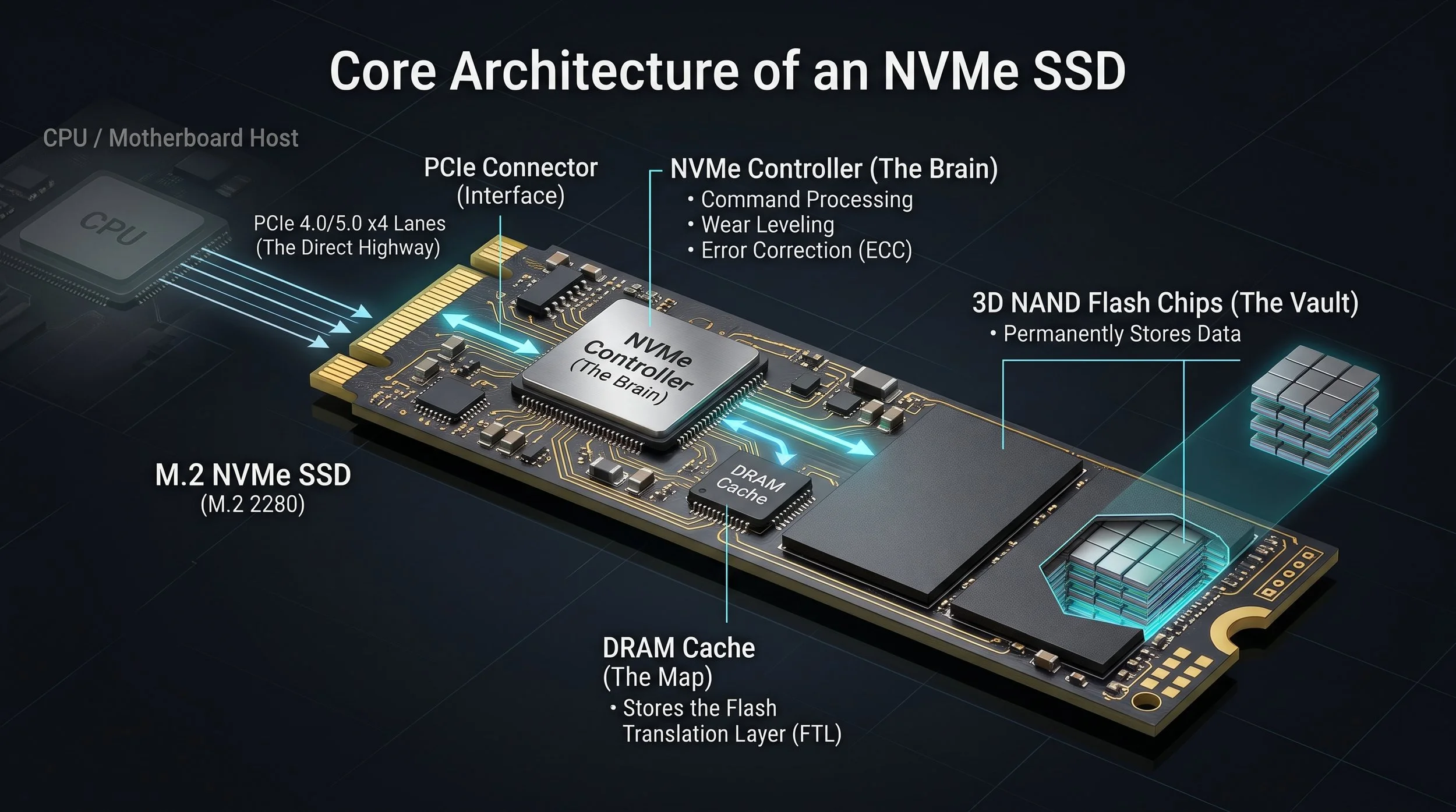
The NVMe Controller is an onboard multi-core processor that acts as the drive's brain, managing read/write commands, error correction, and memory mapping.
The 3D NAND vertically stacks layers of memory cells, with trapped electrons storing data permanently without requiring power. Basically, this is RAM, except it retains data when the system is powered off.
Why are NVMe's So Fast?
Past SSDs relied heavily on AHCI (Advanced Host Controller Interface), a protocol built solely for mechanical drives that supports only a single command queue with 32 slots—forcing modern multi-core CPUs to wait in line.

However, NVMe replaces that single road with a superhighway, supporting up to 64,000 parallel queues with 64,000 commands per queue. When the computer requests a file, the controller looks up its physical location in the map—better known as the Flash Translation Layer (FTL)—stored either in an onboard DRAM chip or borrowed system RAM (HMB)—and reads it across multiple NAND chips simultaneously.
The Maintenance Behind-the Scenes
Because NAND flash can be written in small pages but must be erased in large blocks, the NVMe controller constantly runs background tasks to maintain peak performance. TRIM collects the data rubbish by clearing out deleted data blocks during the drive's idle state so that future writes can happen instantaneously.
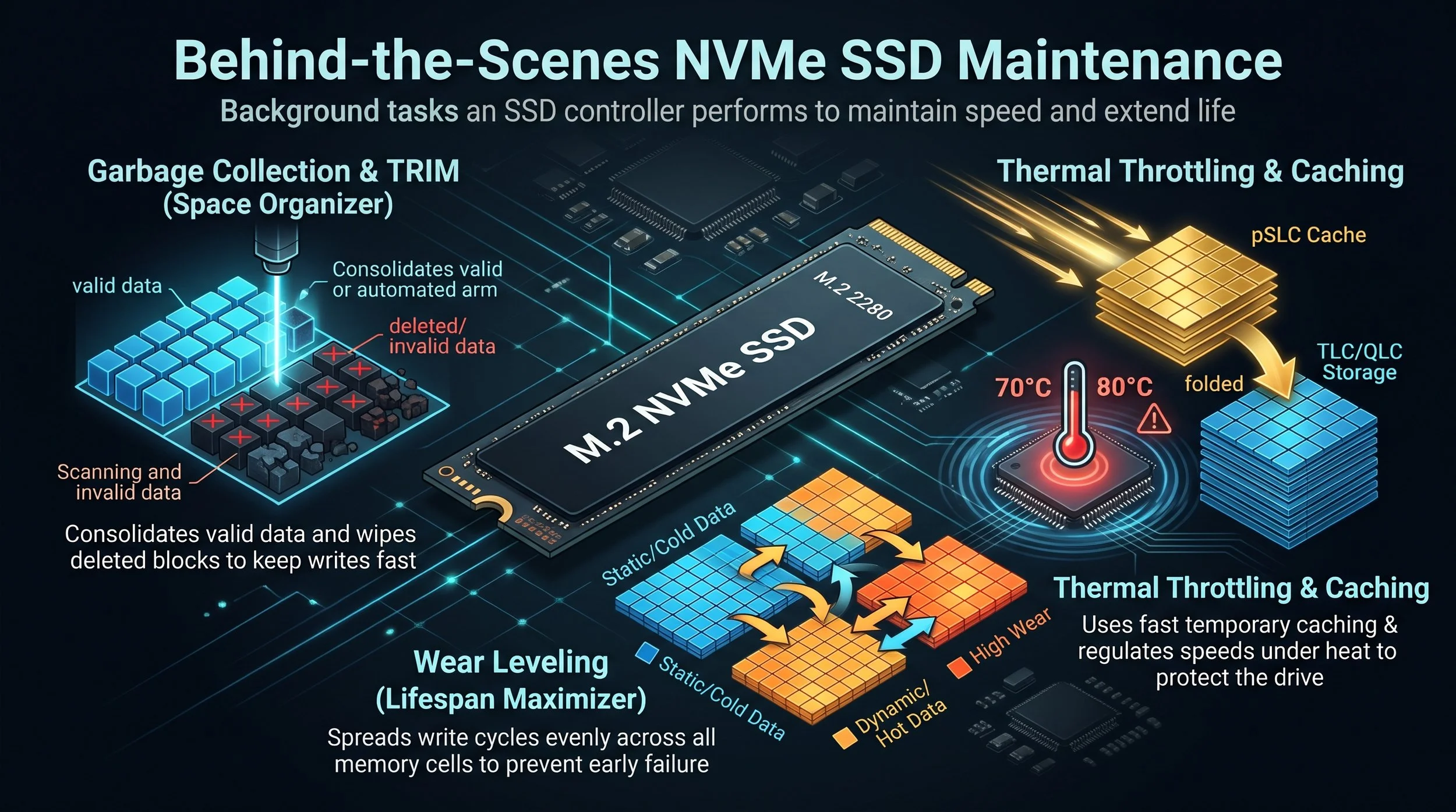
Wear-leveling in NVMe SSDs evenly distributes writes across all memory cells to maximize the drive's lifespan. Temporary writes are made possible by pSLC Caching; this provides incoming data in a fast, single-bit mode before it is organized into a much denser storage format.
What have you learned?
Now that you understand how the NVMe SSD works and its overall architecture, let's recap what you have learned. To achieve its breakthrough speed, the NVMe SSD must be paired with 3D NAND flash and a direct connection to the computer’s processor, entirely bypassing the bottleneck of the legacy hard drive interface. This is enabled by the drive's core component: the intelligent controller, which manages tens of thousands of parallel command queues while optimizing data placement in the background. All while NVMe turns storage into an ultra-responsive, low-latency pipeline built mainly for the modern computers you’re using today.