
Let's Build an AI-Efficient PC, Shall We?

AI is here to stay, so anyone looking to use it effectively needs a system optimized for local AI—not a traditional gaming PC. While high framerates prioritize clock speed and rasterization pipelines, local machine learning—whether running quantized Large Language Models (LLMs), training LoRAs, or rendering generative diffusion pipelines—demands memory bandwidth, VRAM capacity, and sustained thermal stability.
Building an AI-efficient PC means allocating budget for top-tier hardware to avoid compute bottlenecks.
The Core Pillar of It All: the GPU VRAM
If you're building an AI-efficient PC, you'll need a top-of-the-line dedicated graphics card, especially if you want to run AI models without relying on RAM, which can cause severe latency issues.
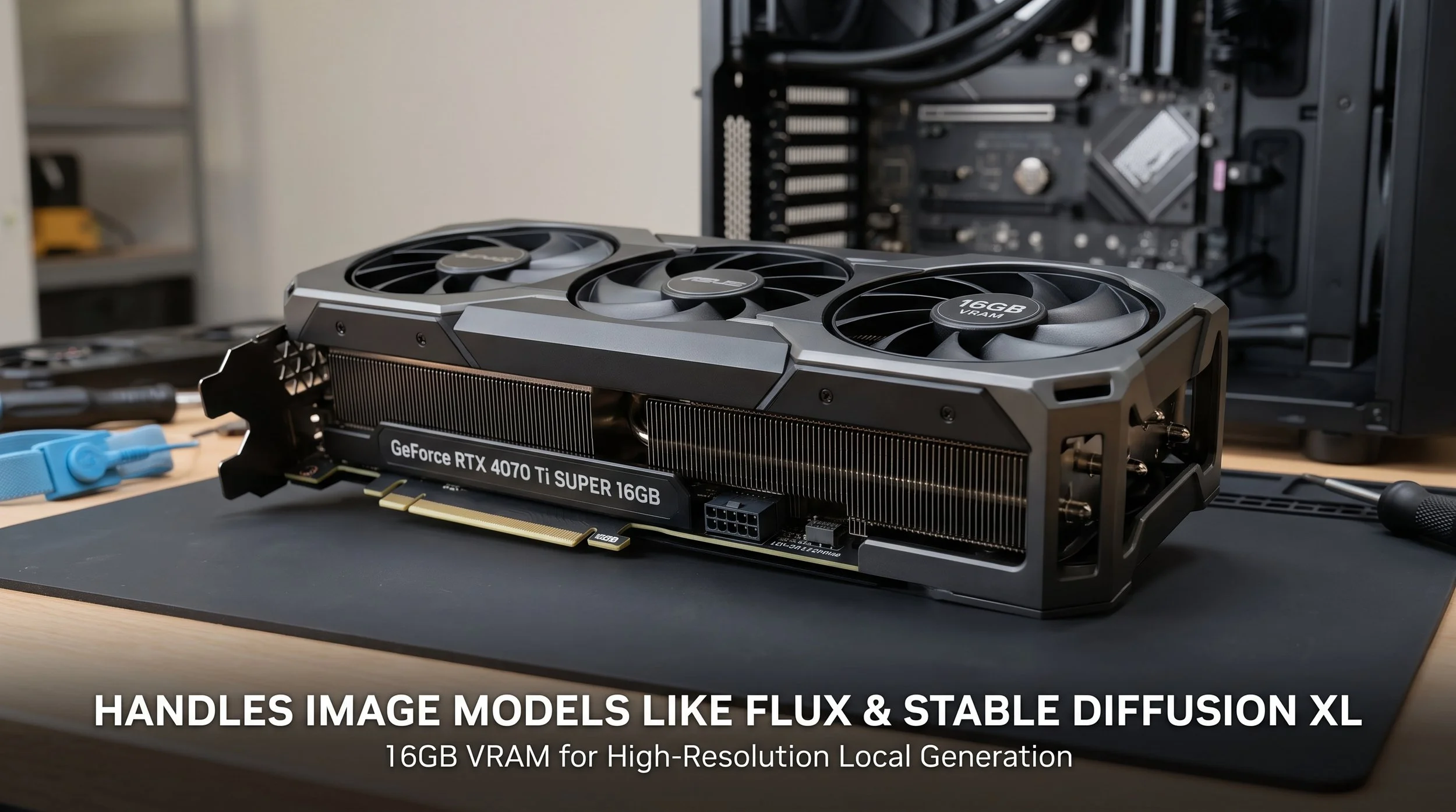
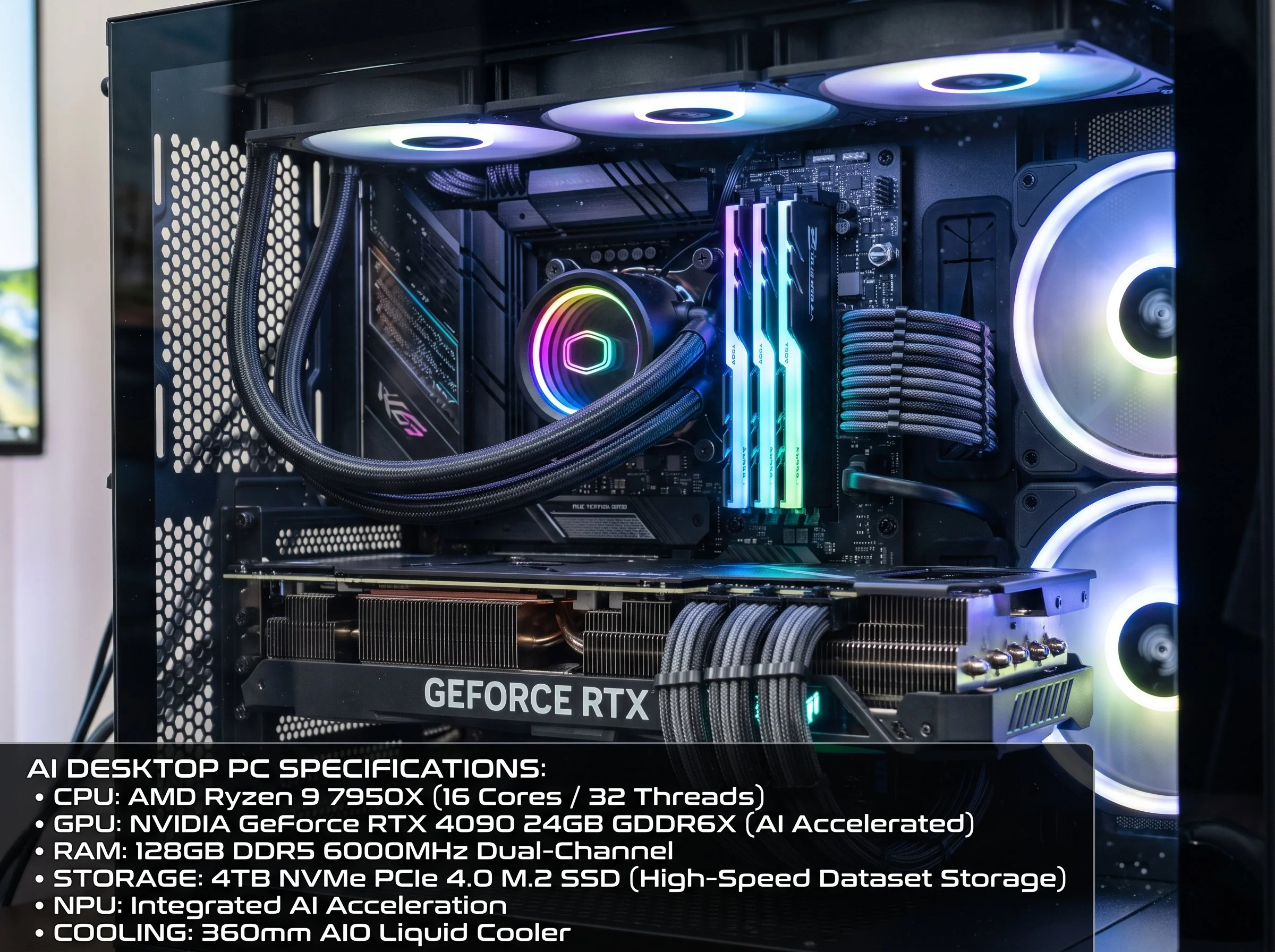
Aim for 16GB to 24GB of VRAM. A 16GB buffer is capable of accommodating 7B-14B parameter models at 4-bits/8-bits quantization, such as Qwen 2.5, Llama 3, or Mistral, alongside context windows and image models like Flux/Stable Diffusion XL. To run much larger 32GB models and do native fine-tuning, 24 GB of VRAM is sufficient.
The NVIDIA ecosystem remains the industry standard, mainly because CUDA, TensorRT, and FlashAttention are native across major AI runtimes (Ollama, vLLM, LM Studio, ComfyUI).
Consider System Memory (RAM) and Motherboard Bandwidth
Your baseline RAM capacity should be 32GB to 64GB of DDR5 RAM. When running models that exceed GPU VRAM, tools such as 11ama. cpp offload layers to system memory. High-speed DDR5 (6000 MT/s CL30) helps reduce token-generation bottlenecks during memory buffering.
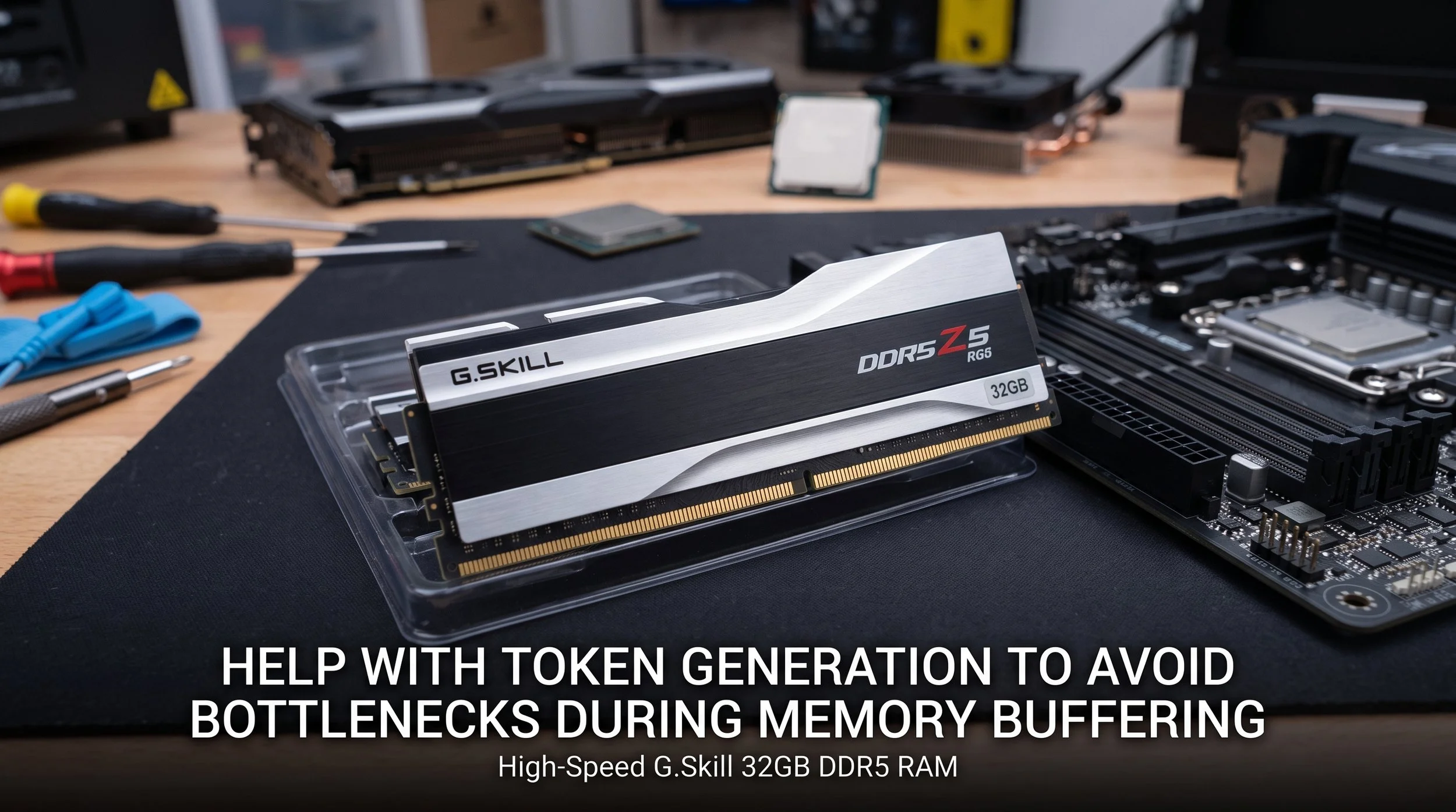
Users should stick to a 2-DIMM configuration; for example, two 32GB sticks rather than four. This preserves memory controller stability while keeping EXPO/XMP fully enabled.
( Facts: EXPO and XMP let DDR5 RAM run at its advertised speed on modern AMD Ryzen and Intel systems.)
There Should Be High-Throughput NVMe Storage
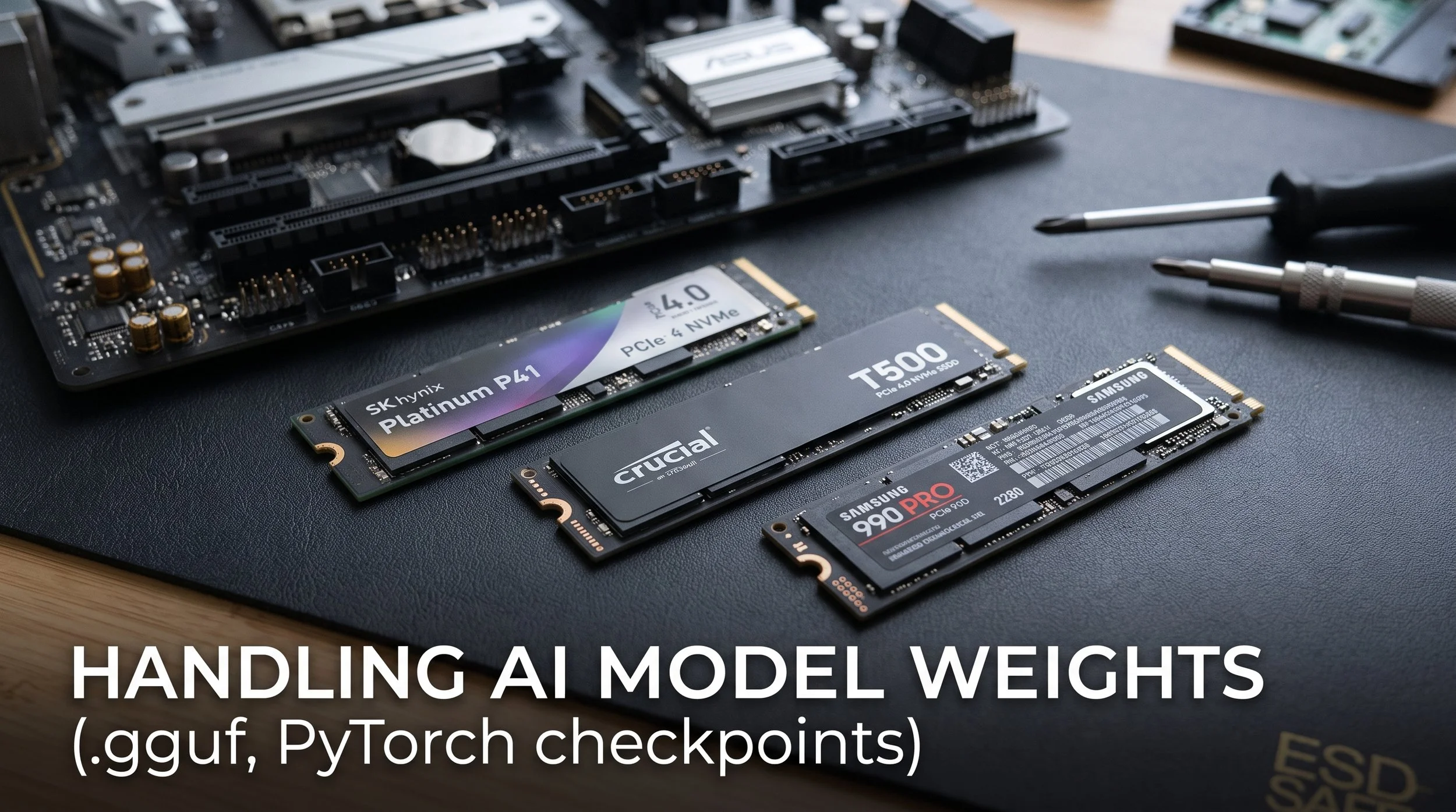
AI models consume a lot of storage space, ranging from 4GB to 50GB. Choose a high-capacity PCIe 4.0 or 5.0 NVMe SSD with sustained read speeds above 5,000 MB/s and a dedicated DRAM cache (such as the DK Hynix Platinum P41, Crucial T500, or Samsung 990 Pro). Fast sequential reads shorten model load times when checkpoints load or LLMs swap into memory.
Sustained Processor and Power are Needed
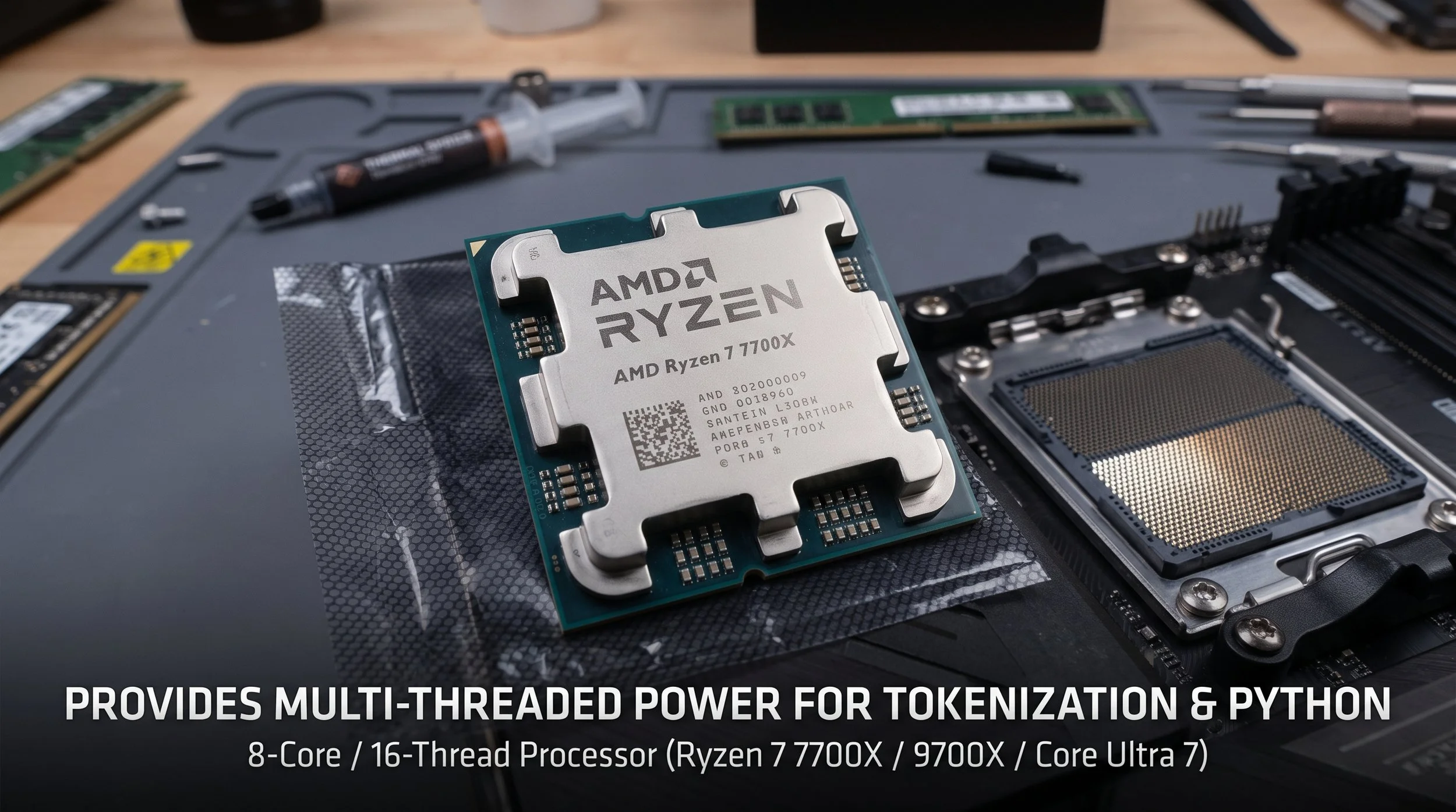
A balanced 8-core/16-thread processor (such as an AMD Ryzen 7 7700X/9700X or Intel Core Ultra 7) provides ample multi-threaded throughput for dataset preprocessing and Python pipeline orchestration without overspending on cooling.
Sustained batch diffusion tasks hold GPUs at the max TDP for extended periods. That is why you need to choose an 850W-1000W atx 3.0/3.1 certified PSU rated 80 Plus Gold or Platinum to handle sudden power spikes and provide direct 12V 2x6/12VHPWR cabling without putting a strain on the adapter.
Thermal Protection and Chassis Airflow
Extended gaming sessions and video encoding output excessive heat across GPU silicon, VRMs, and fast NVMe controllers. To dissipate heat effectively, choose a high-airflow mesh PC case with at least three front intake fans and a top exhaust 280mm/360mm AIO cooler (like the be quiet! Pure Loop 3 240mm AIO Water Cooling) to prevent thermal throttling during long batch commands.
Let’s Keep This in Mind
When building an efficient AI PC, eliminate bottlenecks before you start, especially if you expect large model architectures that demand high throughput. Prioritize a modern NVIDIA GPU with 16GB to 24GB of high-speed VRAM, paired with low-latency DDR5 system memory and sustained PCIe Gen 4/5 NVMe storage. This will certainly ensure seamless local model loading and precise execution without crippling your system. Good luck with your build.