
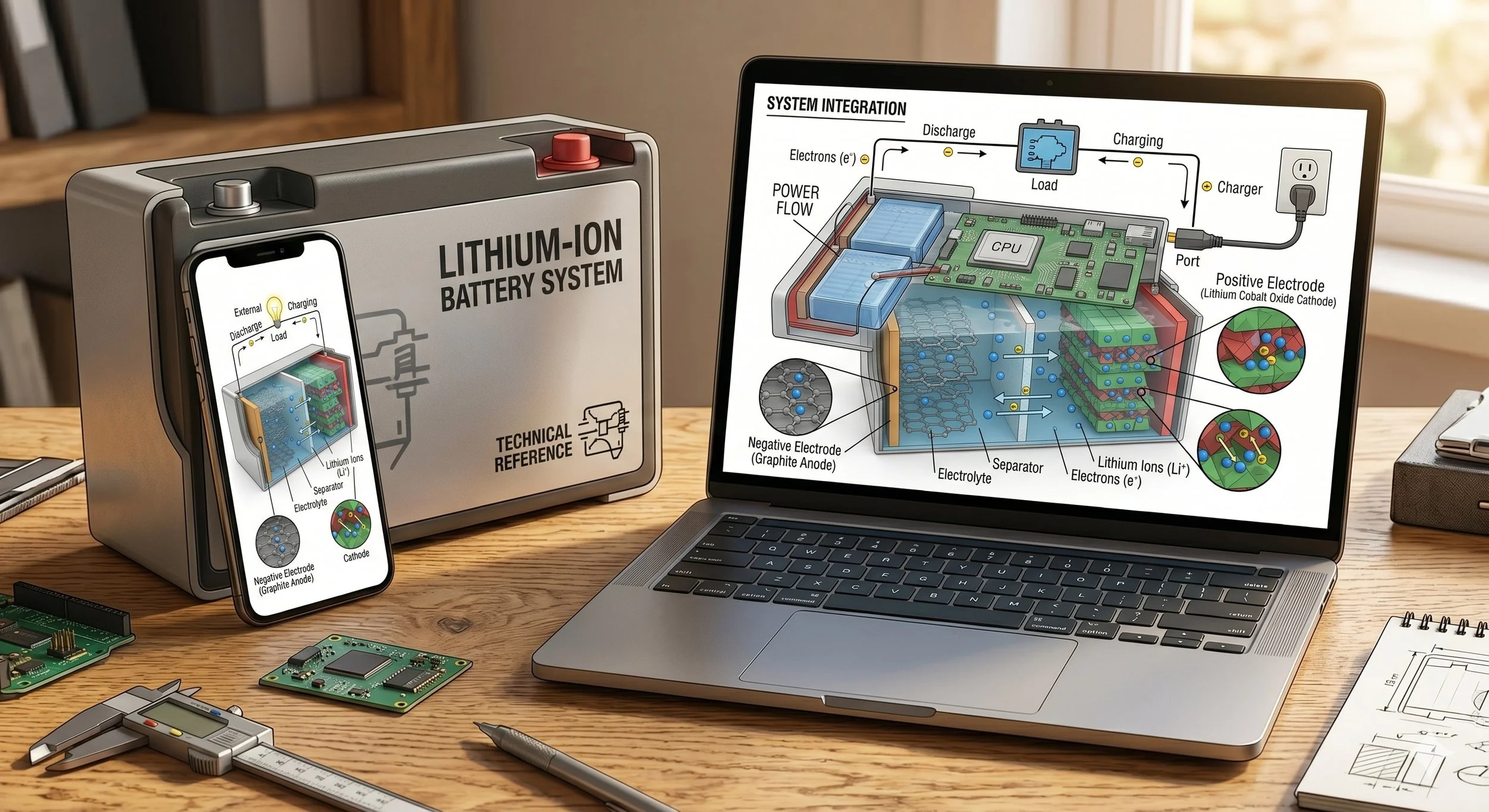
Explanation Needed: How Do Lithium-ion Batteries Work
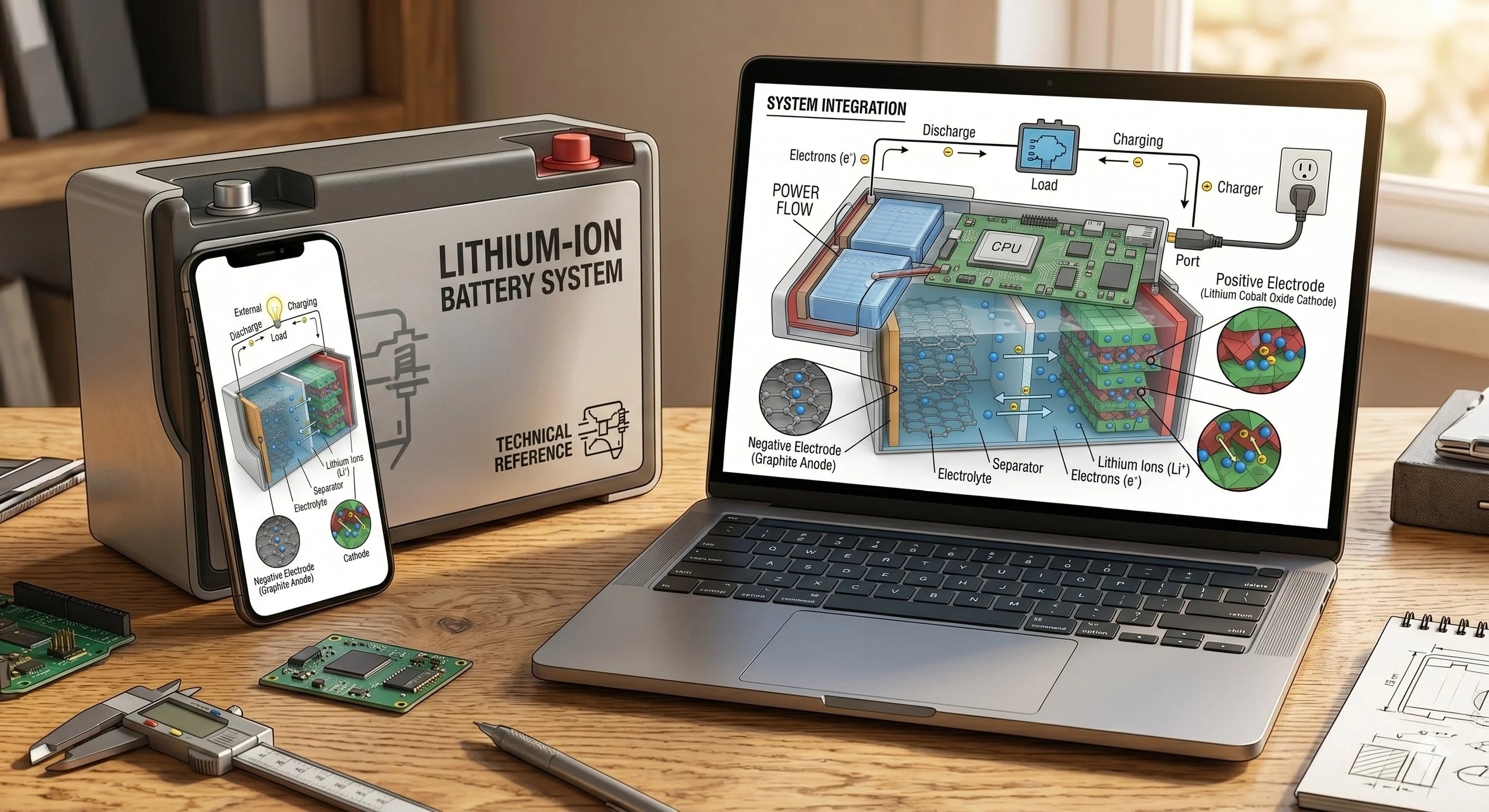
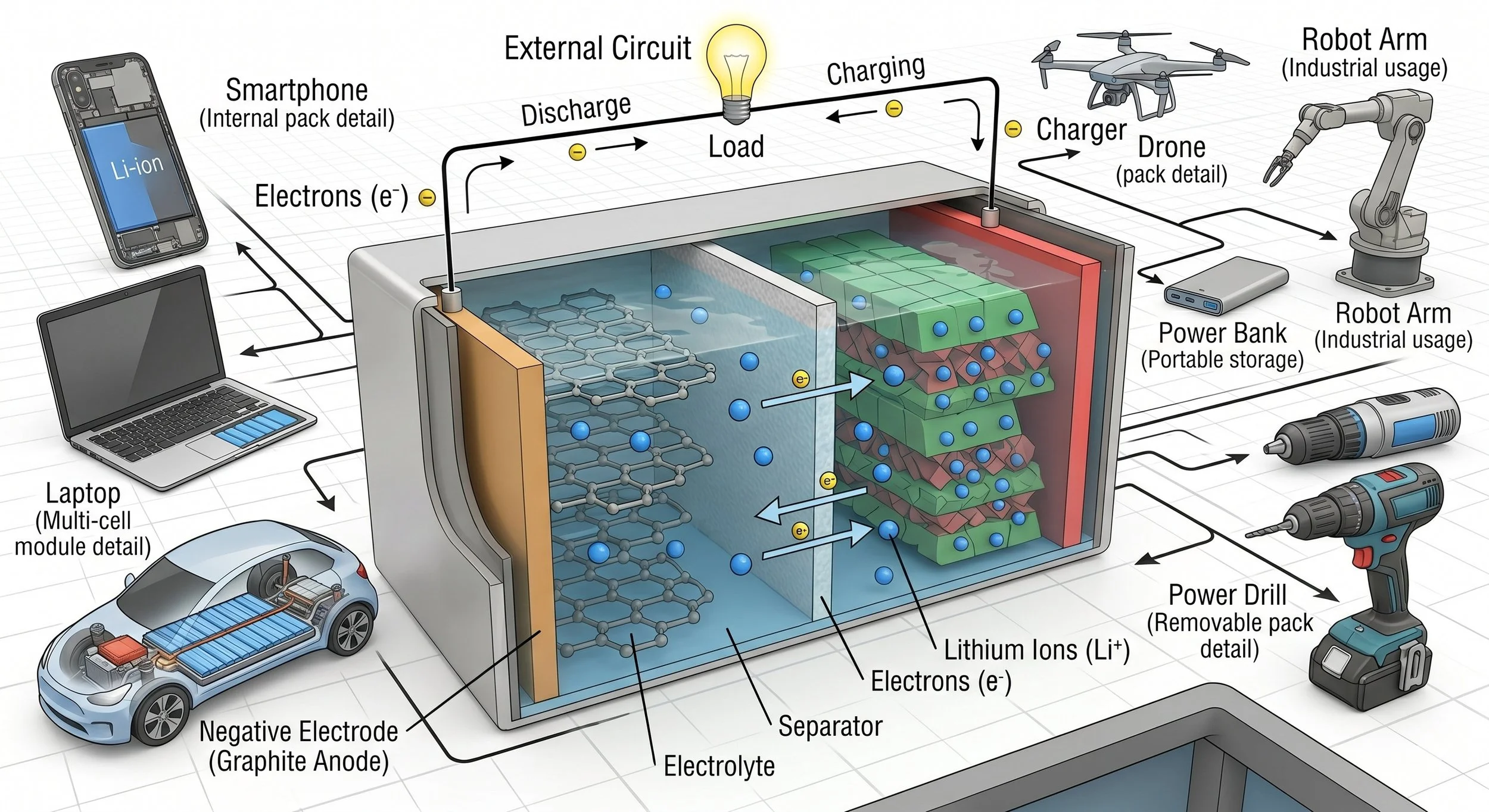
I don't think people understand the technological importance of lithium-ion batteries. It's in every single device we own. Whether you're scrolling on your smartphone, accelerating an electric vehicle, or waking a laptop from sleep, your lithium-ion battery powers these devices. At the heart of the battery's functionality is an elegant electromagnetic engine that stores massive amounts of energy without burning any fuel--shifting the lightest solid element on the back of the periodic table back and forth between two molecular cells. Let me explain further.
The Critical Components of The Lithium-Ion Battery
There are four fundamental parts of the Lithium-Ion battery. Firstly, there is the Anode (Negative Electrode), which is made of carbon graphite. This is where lithium ions are stored when the battery is fully charged. Then there is the Cathode (Positive Electrode), which is made up of a lithium metal oxide (such as Lithium Cobalt Oxide or Lithium Iron Phosphate). This is also where the ions are stored when the battery is discharged.
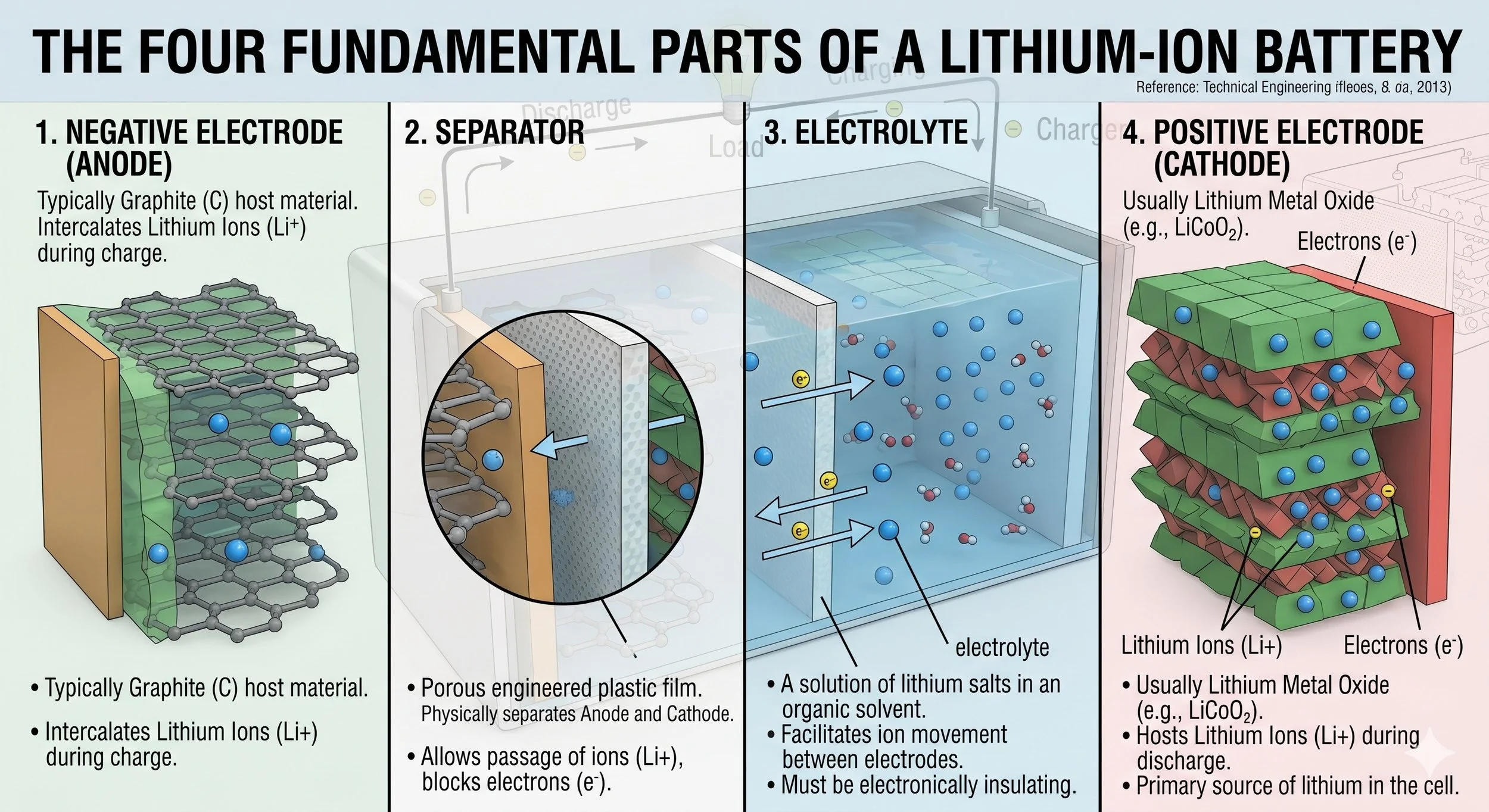
The third component is the Electrolyte, a liquid or gel-like chemical medium that allows lithium ions to flow seamlessly between the anode and cathode. Finally, enter the fourth and final component, the Separator. A micro-perforated plastic membrane that physically keeps the anode and cathode from touching (which can cause a short circuit) while letting ions pass through freely.
How The Lithium-ion Battery Works: Charge vs. Discharge
The magic behind the Li-ion battery lies in the highly reversible chemical reaction. When the device is powering down, it enters a Discharging stage. The lithium atoms stored in the graphite anode release an electron, becoming positively charged lithium ions. These same ions travel through the electrolyte and pass through the separator that is embedded in the cathode. However, the electrons cannot pass directly through the separator. They are forced to take a long route through an external circuit (much like a smartphone's motherboard or a laptop's processor), thereby generating the electrical current that powers the entire device.
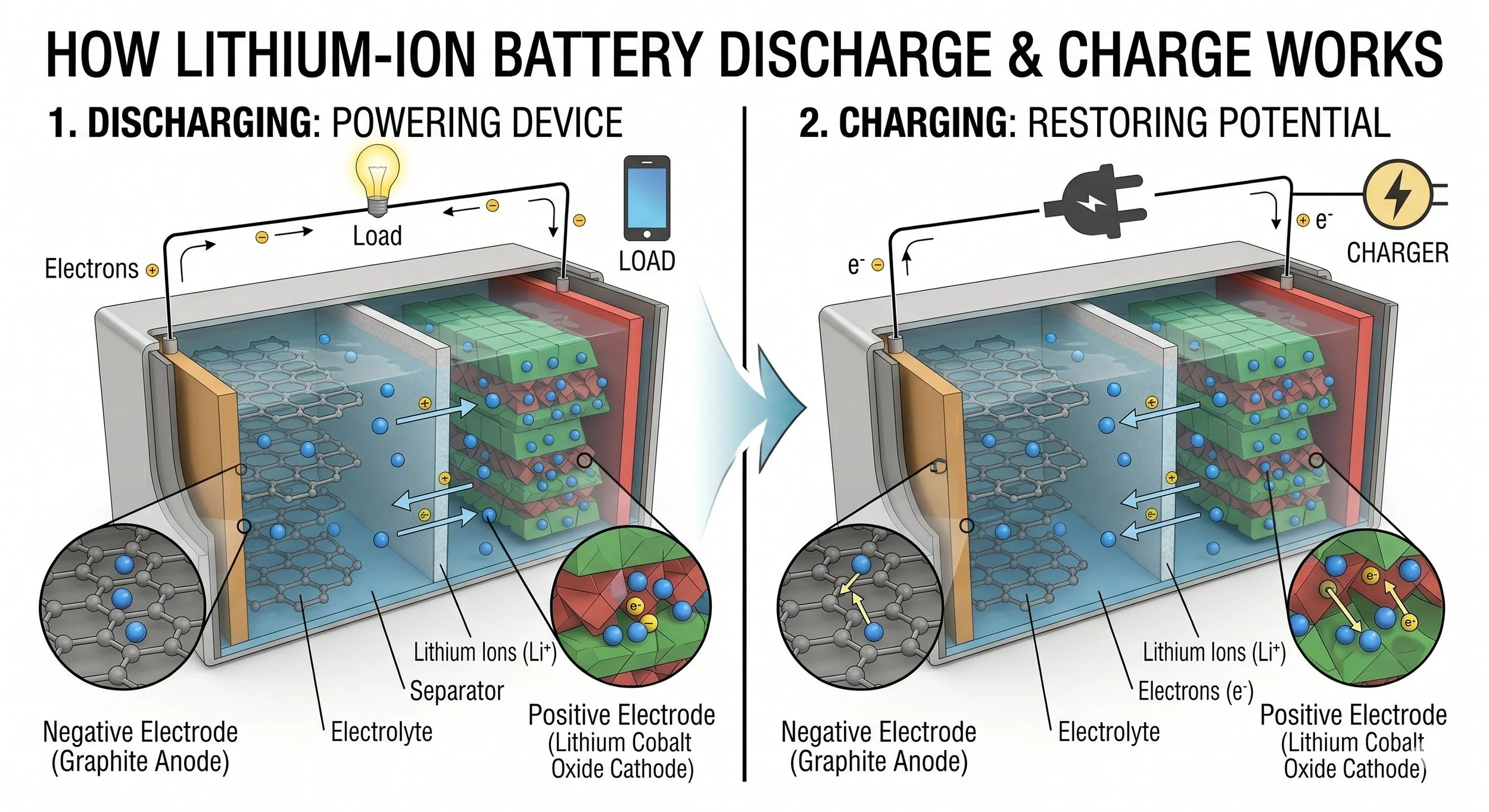
The Charging cycle takes place ( plugging it into the wall) when connected to a power source. This essentially forces the hourglass to invert by applying an external electric voltage. The external power forces the lithium-ion directly out of the cathode, back through the electrolyte-separator, and then forces it to pack back into a graphite anode.
The electrons are then pulled back through the external circuit to meet the ions at the anode, where they store energy for future use.
So Why Lithium
The chemical reaction in lithium-ion batteries takes place for two main reasons. Firstly, the third element on the periodic table is incredibly light and has a very low density. Secondly, the process is highly reactive. It readily loses its outer electron, allowing it to store a large amount of energy in a small space (high energy density). This is why your smartphone is quite capable of packing enough power to last an entire day.
However, after a hundred or more charging cycles, microscopic physical degradation occurs, and side chemical reactions take place in the electrolyte, causing the battery to hold less capacity, which is why your several-year-old device never quite holds a charge as long as it did out of the box.

In Summary…
So now you know how the lithium-ion battery functions, it’s basically a highly efficient, reversible chemical pendulum. By exploiting the unique lightweight and electropositive properties of the element Lithium, these cells store and release energy simply by moving ions back and forth between the microscopic structures of an anode and a cathode. So when we’re using our devices, thermal dynamics are at play, with electrons forced through an external circuit that powers them. To sum it up, the lithium-ion battery is the most successful engineering feat of this modern era. Our devices and even the vehicles we use daily depend on it.