
NVIDIA just announced the RTX Spark: Here's What You Need to Know

At Computex 2026, NVIDIA CEO Jensen Huang unveiled the NVIDIA RTX Spark “superchip,” a Windows-on-ARM consumer processor built in collaboration with MediaTek, marking Nvidia’s entry into the consumer PC CPU market and a direct challenge to Apple Silicon and Qualcomm. The chip is positioned around, enabling local, autonomous AI agents that run in the background rather than focusing on launching traditional software.
Let's Go Over the Key Specifications
The primary goal of the RTX Spark system-on-chip (SoC) is to run massive, complex workflows locally on compact, slim laptops and small-form-factor devices. The Silicon Architecture will use an Nvidia NVLink-C2C interconnect to pair a high-performance 20-core ARM-based Grace CPU with a Blackwell RTX GPU featuring 6,144 CUDA cores and fifth-generation Tensor Cores.
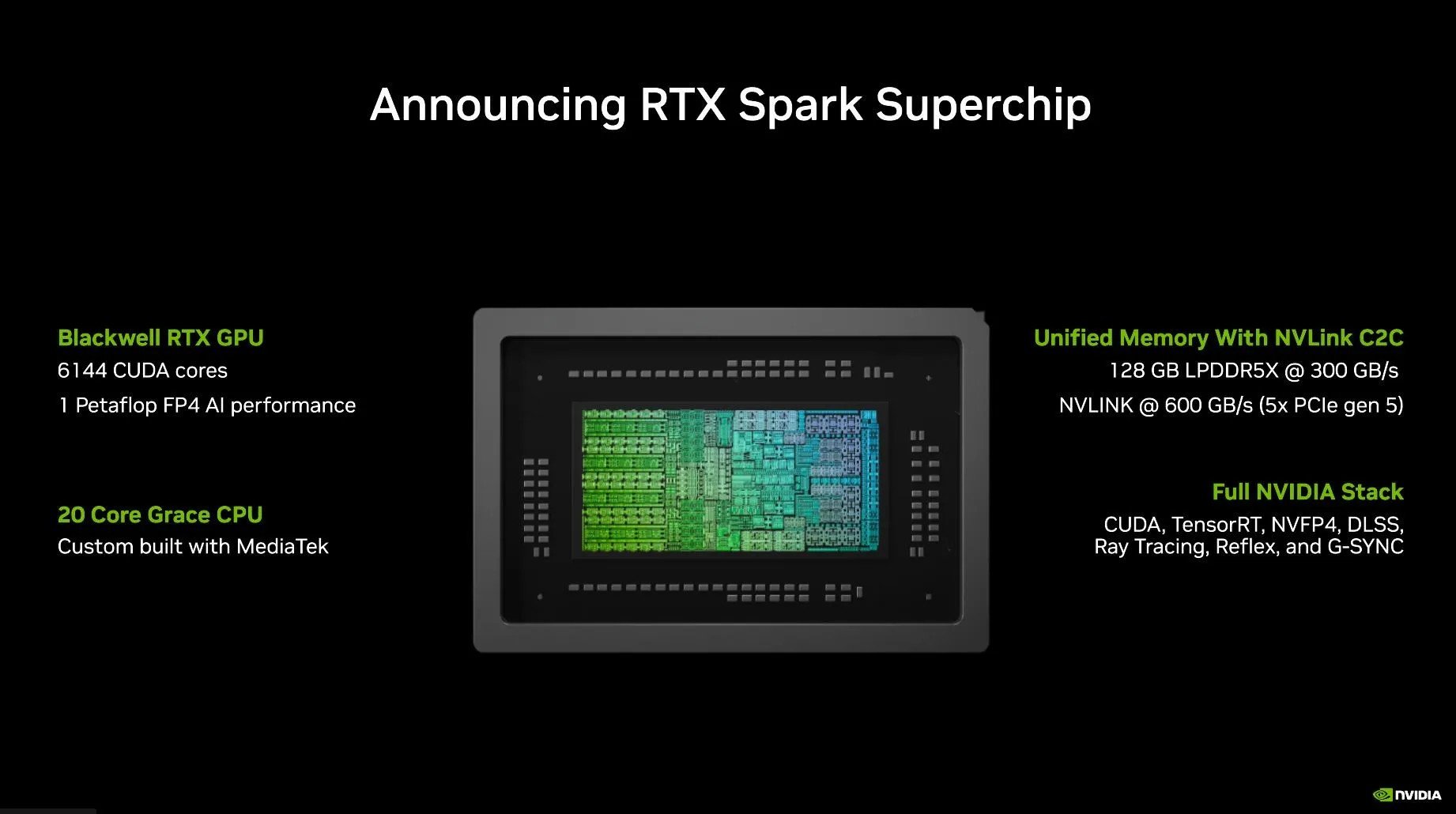
The Unified Memory supports up to 128GB of LDDR5X with 300 GB/s of bandwidth. Nvidia notes that there will be a scaled-down version starting with 16 GB of RAM. The AI processing power will deliver 1 petaflop of local AI compute, which is powerful enough to run a 120-billion-parameter large language model (LLM) entirely on-device with a massive 1-million-token context window.
In-depth Look at Deep Microsoft and Software Integration
Nvidia and Microsoft have formed a partnership to build a highly secure framework that runs natively within Windows, enabling background AI agents to execute multi-step tasks across different apps, all without compromising user data privacy.
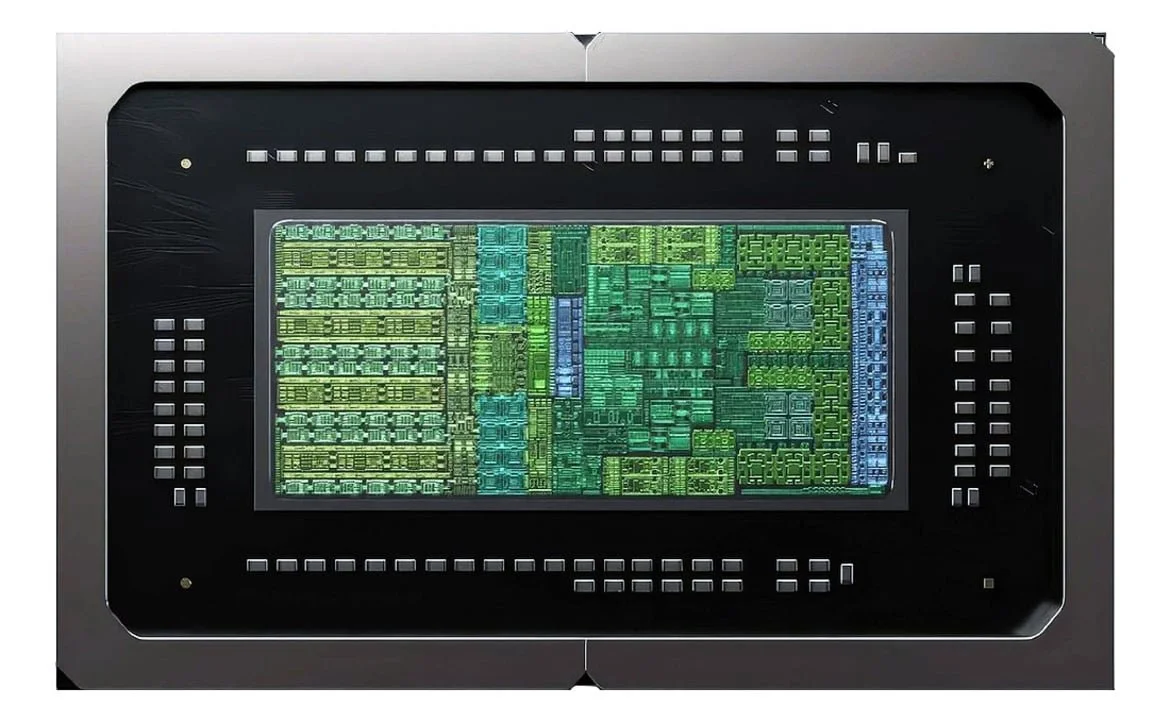
The Windows Security Primitives consist of OS-level isolation and policy enforcement that manage what local AI agents can view and do. The NVIDIA OpenShell Runtime is an open ecosystem that will allow users to control local data execution, enabling third-party open-source agents (such as OpenClaw or Hermes) to run natively from the Windows Taskbar.
Creatives and Gaming Performance will Benefit.
Creative apps such as Adobe are rebuilding Photoshop and Premiere from the ground up for the RTX Spark architecture, promising faster AI and graphics performance for heavy tasks like 12K video editing or rendering 90GB + 3D scenes. Blender 5.3 is also getting explicit optimization.
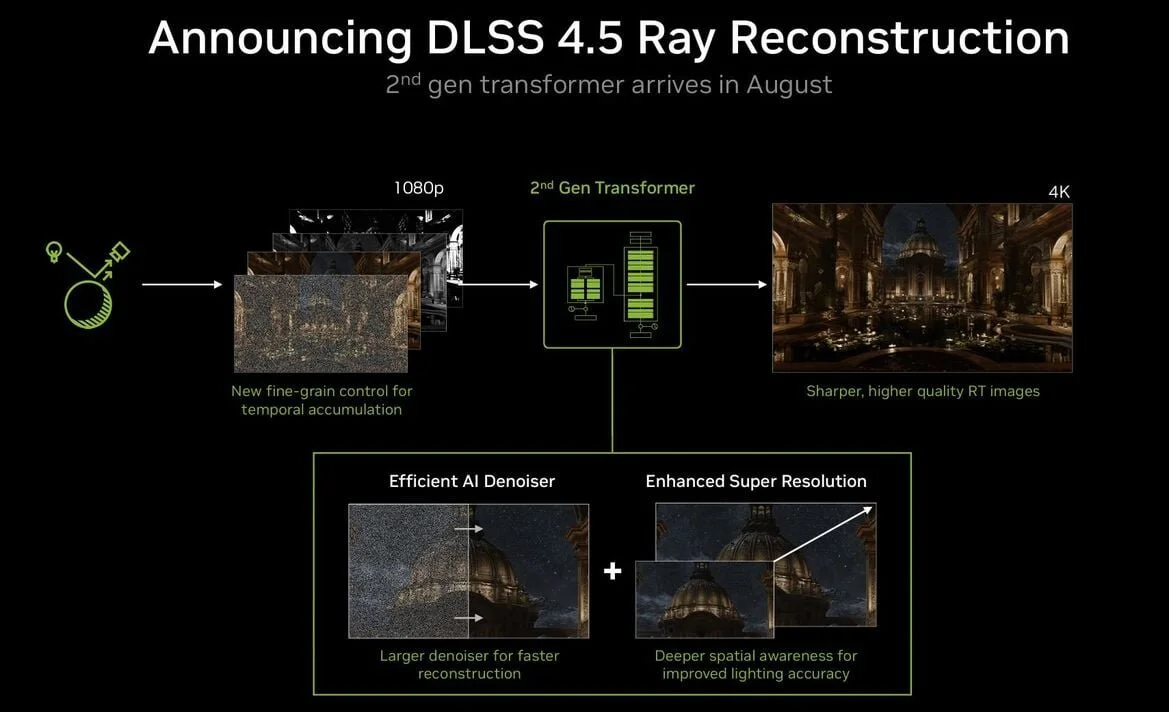
Regarding gaming, the GPU will run the full NVIDIA stack (CUDA, DLSS, Reflex). Right alongside the chip, NVIDIA announced DLSS 4.5 with Ray Reconstruction, coming in August, targeting 1440p ray-traced AA gaming at over 100 FPS on ultra-slim systems.
Available Hardware
The chips powering the laptops will be incredibly thin--down to 14mm thick-- and will weigh roughly 3 pounds, featuring color-accurate tandem OLED displays with G-SYNC technology. The partnership lineup will include hardware from ASUS, Dell, HP, Lenovo, and MSI, debuting this Fall, with Acer and Gigabyte to follow.
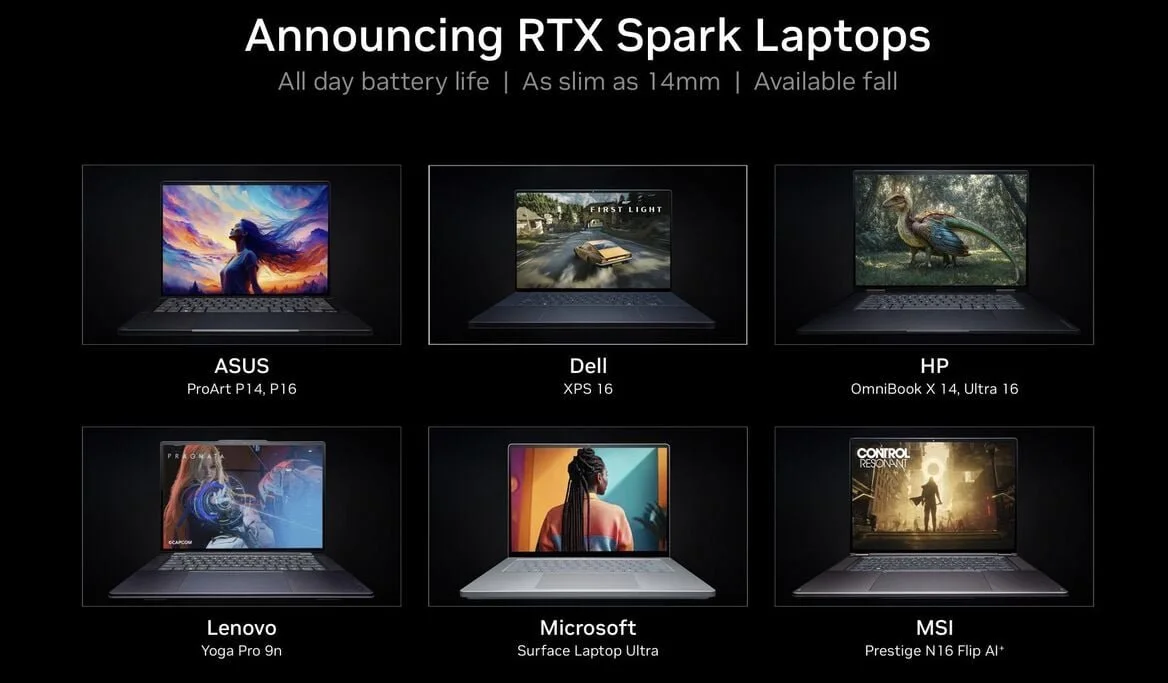
Microsoft gave a sneak peek at the Surface Laptop Ultra. This premium 15-inch mini-LED mobile workstation packs the maximum 128GB unified memory configuration and is expected to launch right before the end of 2026.
Enclosing….
NVIDIA's announcement of the RTX Spark signifies a structural shift in consumer computing, marking a transition from an era of software-centric applications to one of localized, autonomous AI agents. Bringing deep data-center architectural principles, such as an integrated CPU-GPU superchip, along with a massive unified memory layout directly into the thin-and-light laptop market will enable NVIDIA to bypass the latency and privacy vulnerabilities associated with cloud-based AI processing. By collaborating directly with Microsoft engineering, which establishes a strong foundation for the decade of personal computing, edge productivity, and content creation.