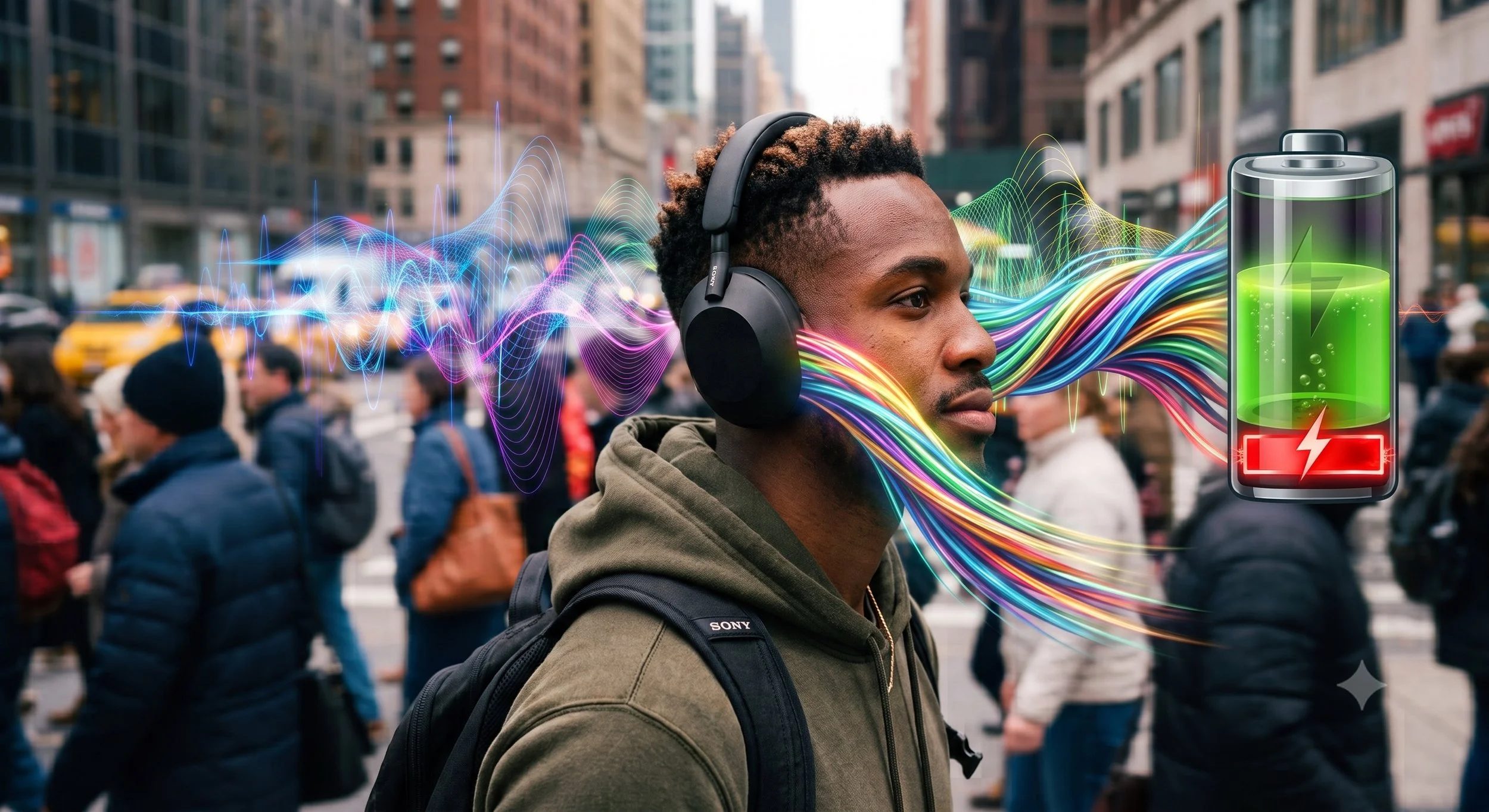
Headphone Tech: Why does Active Noise Cancellation drain Battery Power?
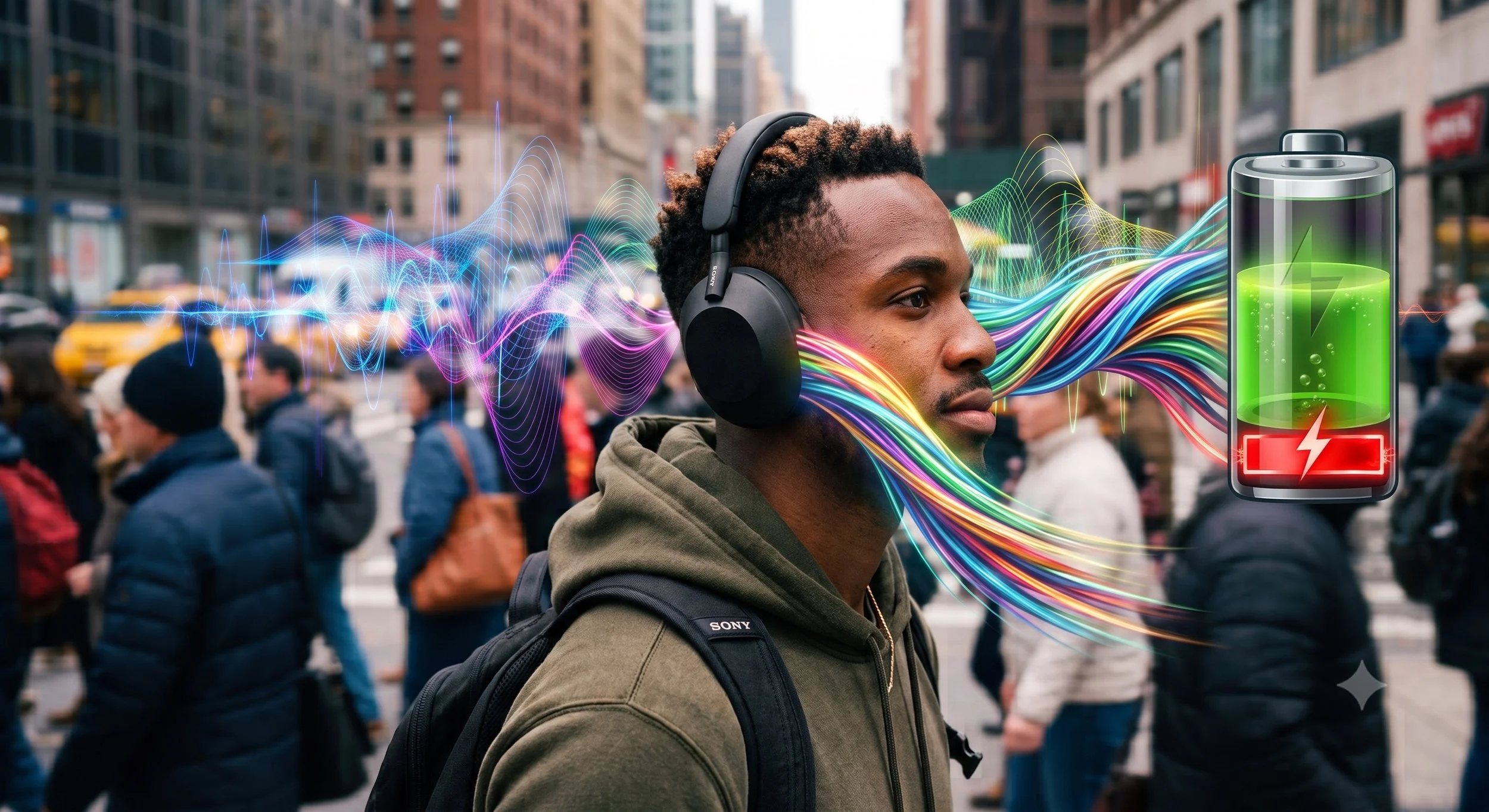
Have you ever noticed your headphones' battery levels drop rapidly as soon as you switch to active noise cancellation mode? There is a big reason for this, and it's not just passive insulation—it's active (no pun); a continuous sound-processing system operating inside your headphones in real time.
When you switch to ANC, four primary hardware components are constantly at work, continually drawing electrical power. I've listed and explained them in depth.
Read On..
Your Microphone is Always Listening
Most modern ANC headphones use hybrid ANC technology, relying heavily on two sets of external and internal mics on each ear cup or bud.
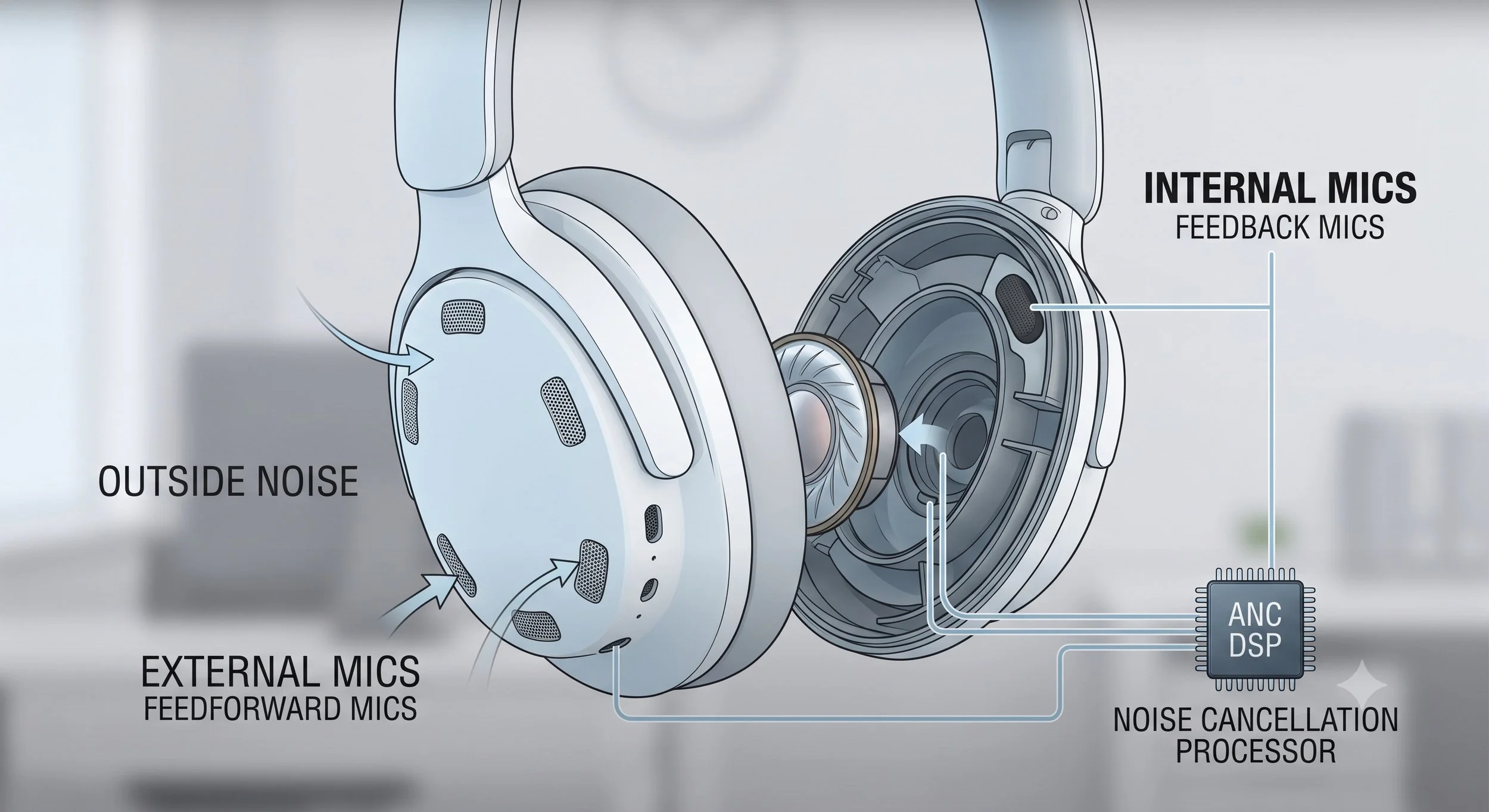
Pay close attention to this image, do you not see the external and internal mic?
You have the Feed-forward microphone, located on the outside, listening for ambient noise in the surrounding environment. Then there are the Feedback microphones; these are located inside the headphones, listening to what your ear actually hears under the headphone cushion.
These two microphones require constant power so they can sample incoming audio continuously, often taking place a thousand times per second.
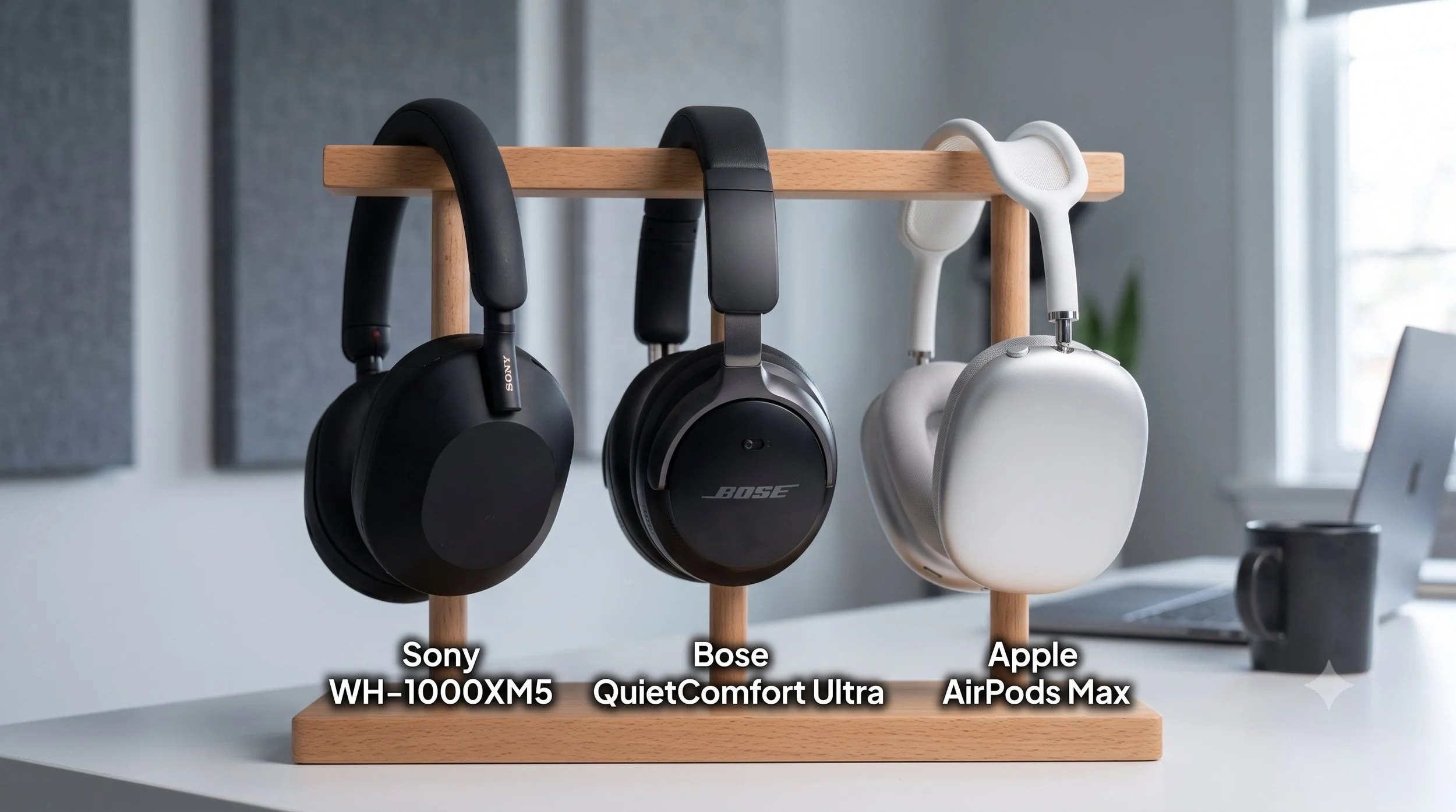
These are three of the best Active Noise Cancelling headphones on the market, in my opinion. With that said, would purchase these headsets?
Digital Signal Processing in Real Time
Digital Signal Processing accounts for most of the ANC's power consumption. The audio signal from the microphones is transmitted to an on-board DSP chip. For noise cancellation to take place, the chip must analyze the exact waveform, frequency, and phase of the outside noise. Then it must calculate an inverted "anti-noise" waveform. Here is an example of that calculation: 180 degrees= out of phase.

Here’s an exaggerated render of the DSP chip.
Again, this is a lightspeed process that takes place in a mere microsecond, so the anti-noise I spoke of earlier hits your ear at the same moment as the external noise. The continuous mathematical calculations require active CPU cycles on the DSP chip, generating a significant amount of heat and drawing a great deal of current from the battery.
The Drivers Work Extra Hard
The speakers with passive headphones only push air to play music. However, when ANC is enabled, the drivers have to output two audio signals simultaneously during music/audio streaming and the generated anti-noise sound wave.
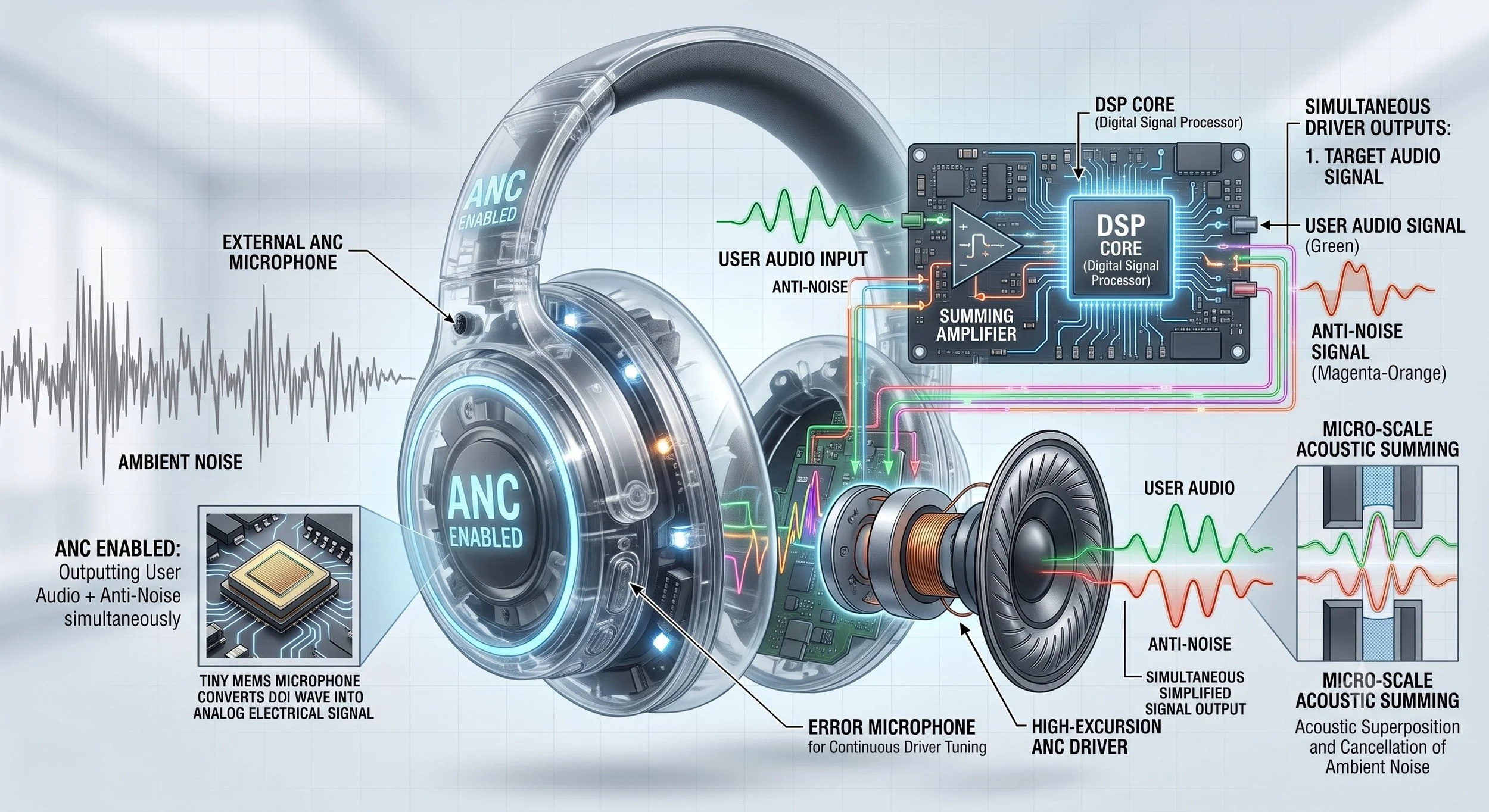
So let’s break this image down. Here we have headphones drivers at work generating Anti-noise waves.
Constant movement of the speaker's diaphragm pushes out extra inverse sound waves, especially low-frequency anti-noise waves, that mimic the sound of a rumbling jet engine or a humming HVAC. This requires extra electrical power from the amplifier.
The Loop Adjustment and Continuous Feedback
Noise cancellation isn't just static, mainly because environmental sounds are constantly changing and the fit or seal of your headphones can shift slightly during head movement; the microphones' feedback continuously measures the acoustic seal and signals the DSP to adjust its filter parameters while you're mobile.
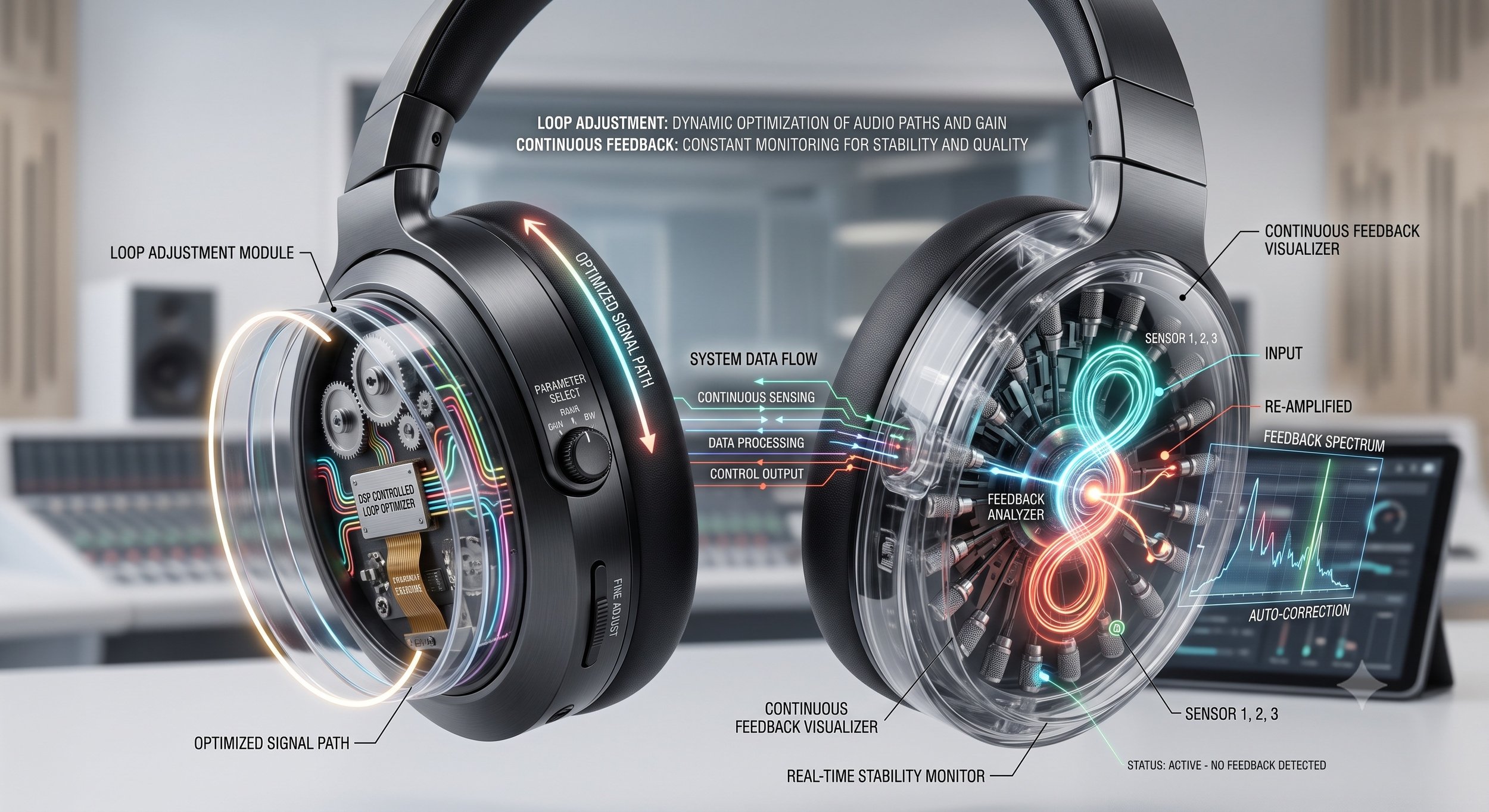
Here’s another exaggerated you get the point render of ANC headphones loop adjustment and Continuous feedback
So how does this impact the battery? It depends on the specific model; one thing is for sure: switching ANC off will typically extend wireless headphones' battery life by 20% to 40%.
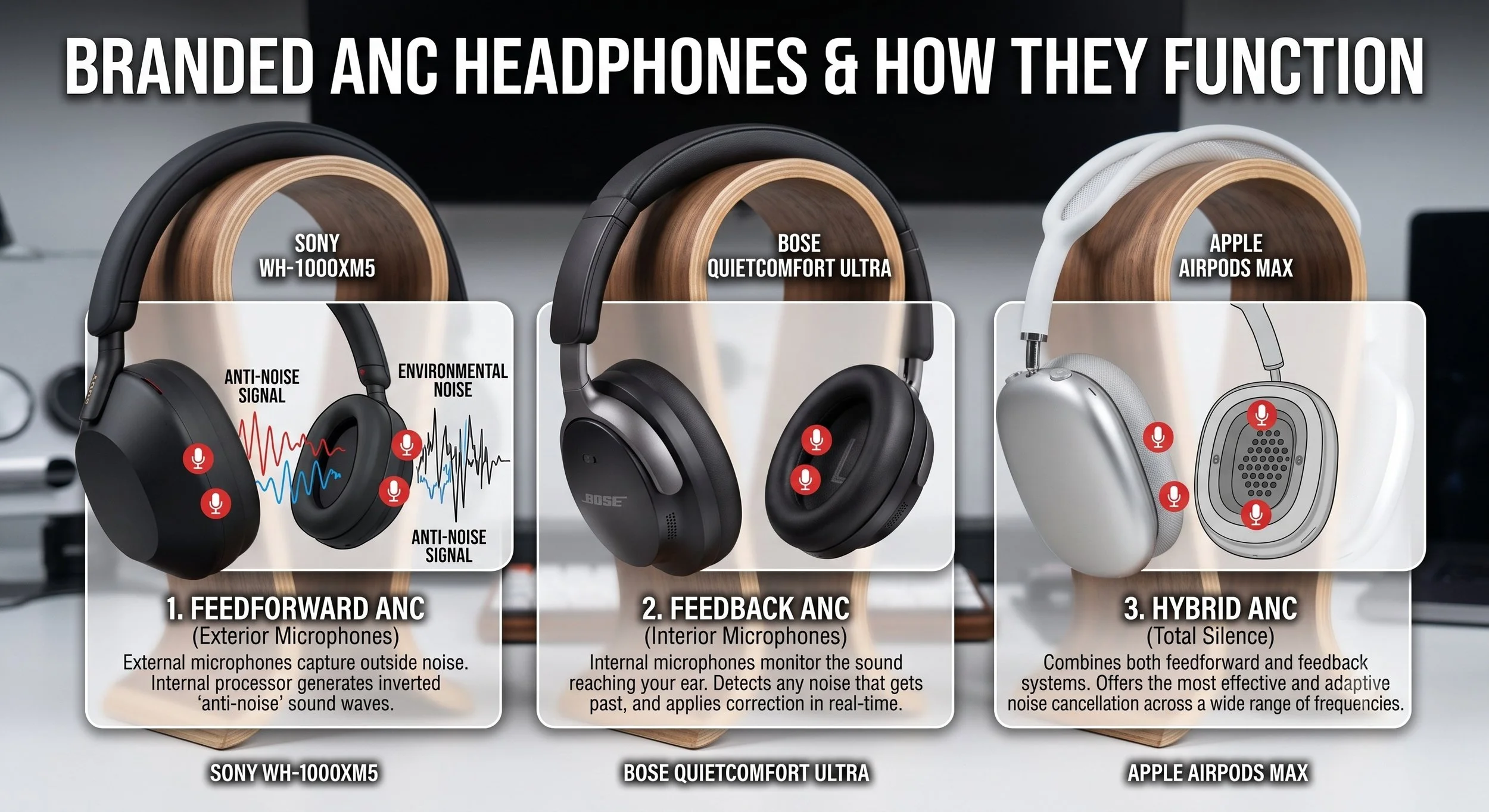
The Concluded Recap
Now you understand why, once you activate the ANC feature on headphones, the battery drains faster. Let's recap what you've learned from this post: ANC is actively operating all the time—even when your music is paused. To reduce ambient noise, ANC needs power-consuming components to function continuously in real time; that's the external/internal mics, digital processors, and amplification & drivers. Because of this continuous cycle of listening, the calculated output demands a great deal of electrical current, reducing playback time.