Let Me Explain Valve Steam Deck OLED Price Hike
Well, folks, it seems as if reasonably priced premium handheld consoles have officially come to an end, at least for now. After months of frustrating out-of-stock notices from the company and retail outlets, Valve's Steam Deck OLED is finally back in stock — but there is that caveat. In a sudden update, Valve has significantly raised the prices of its flagship, dare I say iconic, handheld by as much as 45%, citing global supply chain pressure and skyrocketing component costs. Take a wild guess what that component is. Let me explain further.
Breaking Down the New Pricing
Valve's strategy regarding price adjustment isn't about incremental tweaks; it represents a fundamental shift in how the Steam Deck is positioned in the current market. The device itself hasn't received a hardware spec refresh or performance boost, but consumers will definitely feel a financial pinch.
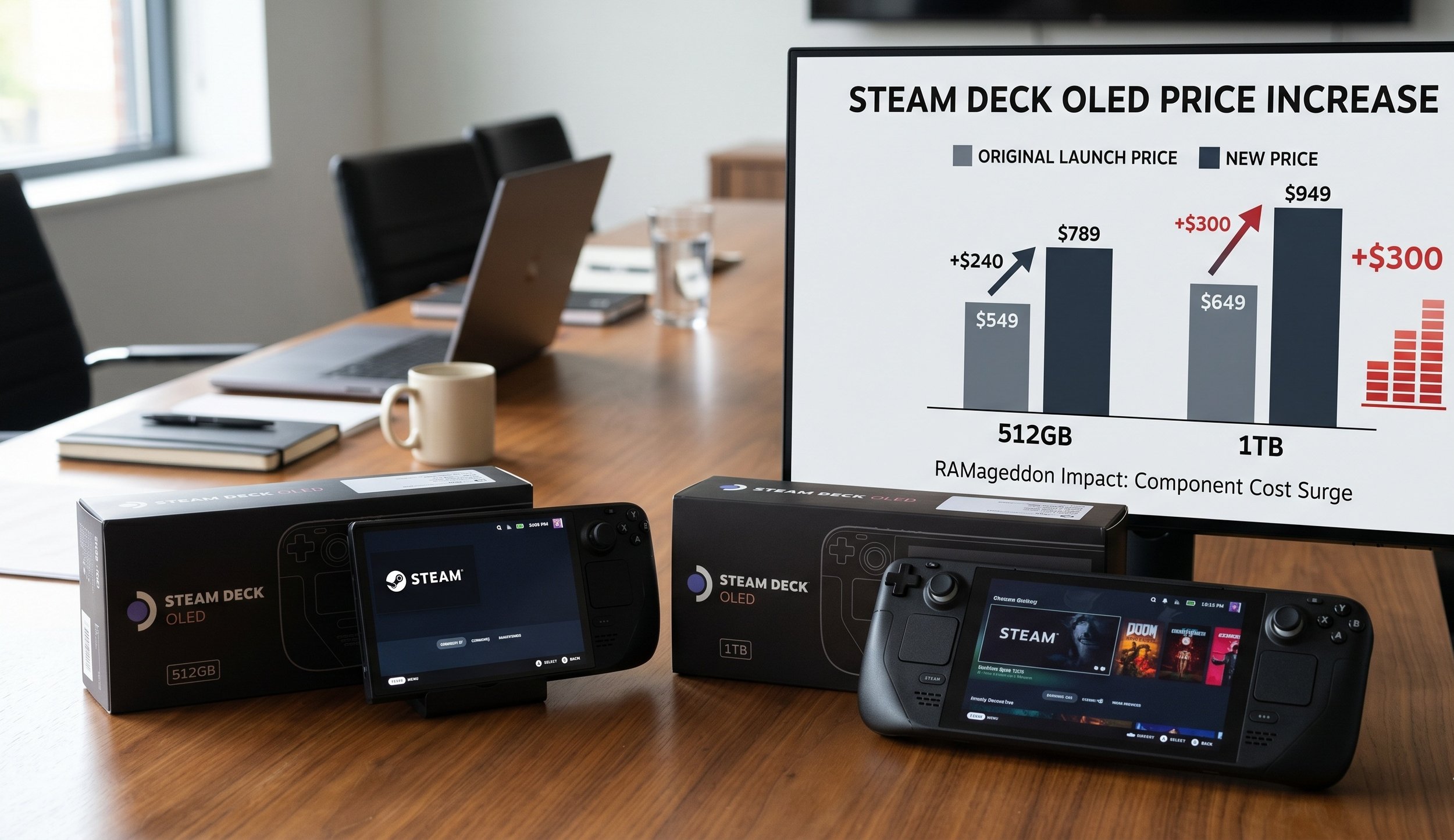
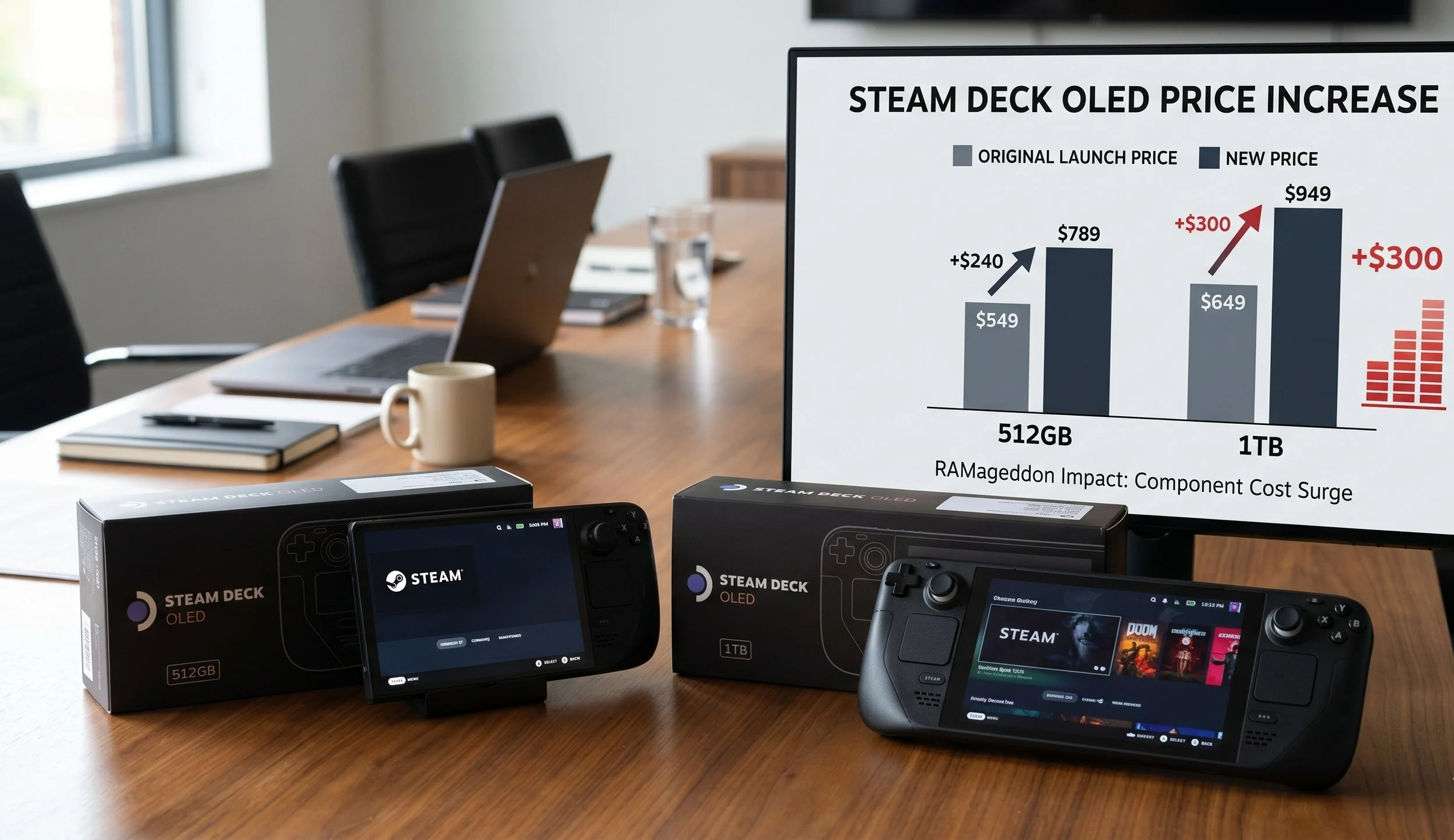
Steam Deck OLED ( 512) Original Launch Price: $549. The new price (2026) is $789. Total Increase: +$240
Steam Deck OLED (1TB) Original Launch Price: $649. The New Price (2026) is $949. Total Increase: +$300
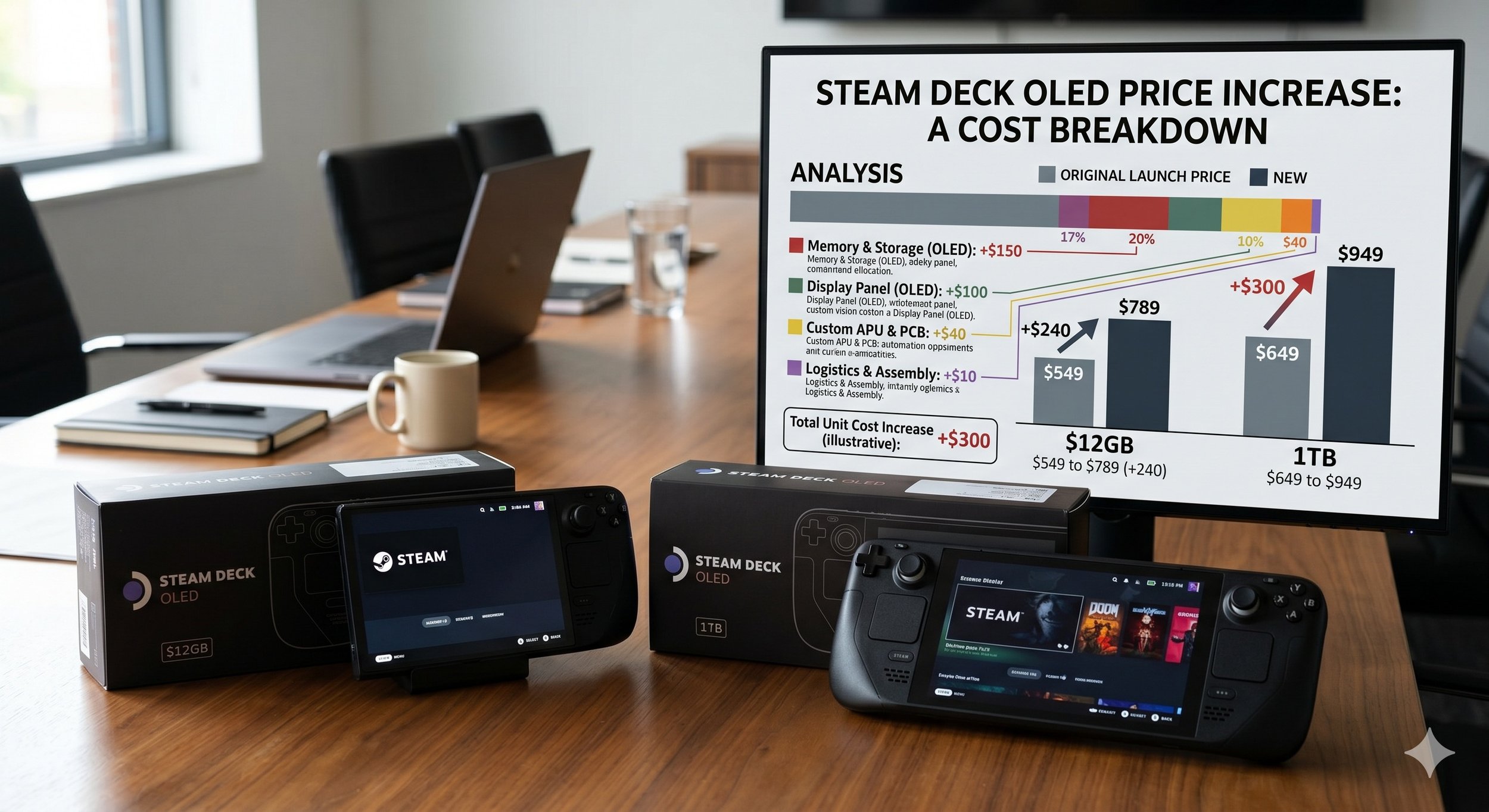
It's worth noting that budget-conscious consumers can still find Valve's certified refurbished LCD models (discounted to new retail prices) at their original low price, starting around $359. However, you need to know that refurbished OLED units have been pulled directly into the market tide, now retailing for $629 for the 512GB model and $759 for the 1TB model.
Why the Sudden Price Hike KEYWORD: "RAMageddon"
So I'm guessing you know the contributing factors to Valve's Steam Deck's sudden price hike right now. The company released a statement explaining that the hardware itself remains identical.
Valve: " These new prices reflect the current state of component costs and other global logistical challenges."

To put it plainly, the primary culprit is the continued industry-wide crisis that many tech enthusiasts are calling a "RAMageddon." An explosive demand for high-performance memory from enterprises' AI Data centers has put a stranglehold on the supply chain for consumer electronics. The scarcity of RAM has also affected mainstream PC memory and storage, causing prices to surge over the past year, with manufacturers diverting their attention to enterprise clients.
The compounding chip shortage has led to macro-logistical hurdles, including fuel costs, shipping constraints tied to recent global geopolitical tensions, and shifting tariff structures in electronic components.
Everyone in the industry is feeling the squeeze
Valve isn't the only manufacturer feeling the squeeze. The price hike is part of a broader inflationary trend that is redirecting the economics of gaming hardware:
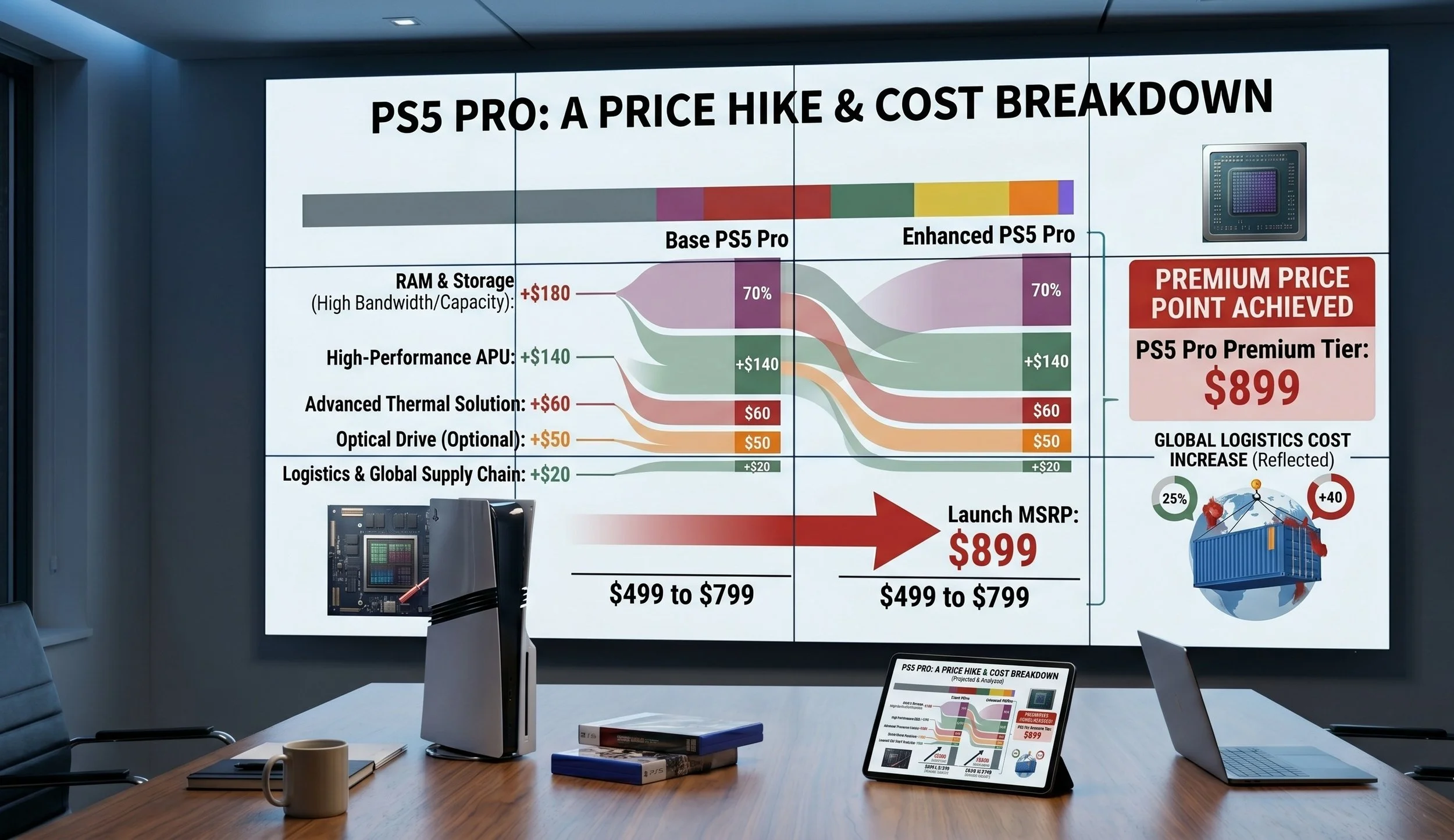
Sony and Microsoft console pricing has faced upward corrections, with the PS5 Pro currently retailing at an $899 premium.
Nintendo: The upcoming Switch is slated for a September price bump to $499.99 to stave off manufacturing pressure.
Window Handheld competitors like Lenovo and ASUS have also adjusted their prices and launched successors at significantly higher tiers.
Furthermore, this cast a huge shadow over Valve's future ecosystem plans. Previously, the company delayed its upcoming home console (the Steam Machine) and its dedicated VR hardware (the Steam Frame) due to unstable market conditions. Given that Steam Decks are approaching the $1,000 threshold, Valve's eventual desktop and VR ambitions will likely command a high price.
So, Here's The Thing
At $549, the Steam Deck OLED was heavily favored amongst gaming enthusiasts. However, at $789 and $949, this will cause consumers to shift towards buying a gaming console (PS5 or Xbox Series), pushing prices into the realm of midrange gaming laptops.
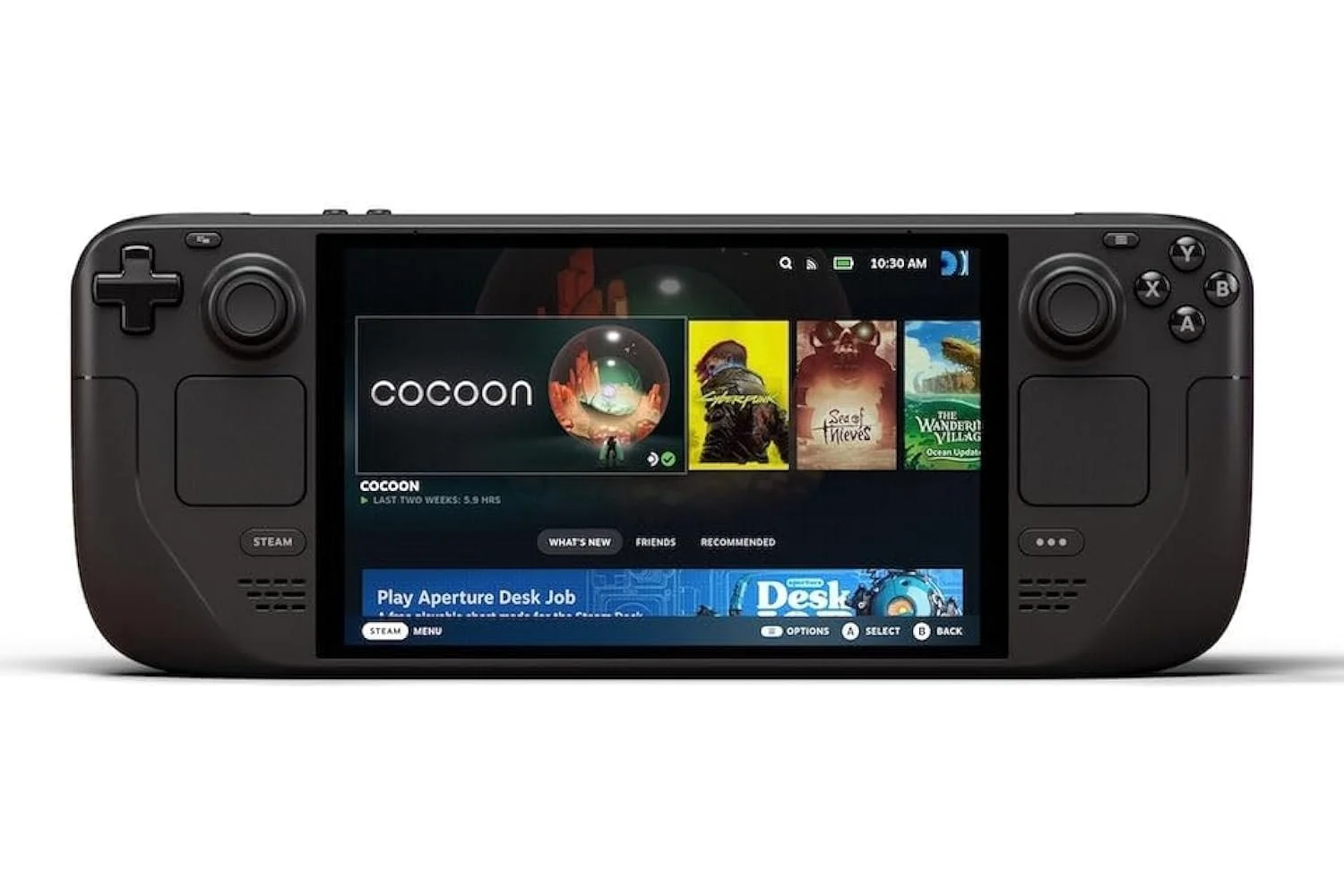
While SteamOS remains an incredibly optimized, seamless ecosystem, the hardware inside the Deck hasn't evolved to match the high premium price tag. For those desperate for an official Valve handheld with full warranty backing, the immediate availability is good news for many, but for the average consumer, looking toward the certified refurbished LCD inventory or waiting for plentiful hardware inventory might be a wise choice.